


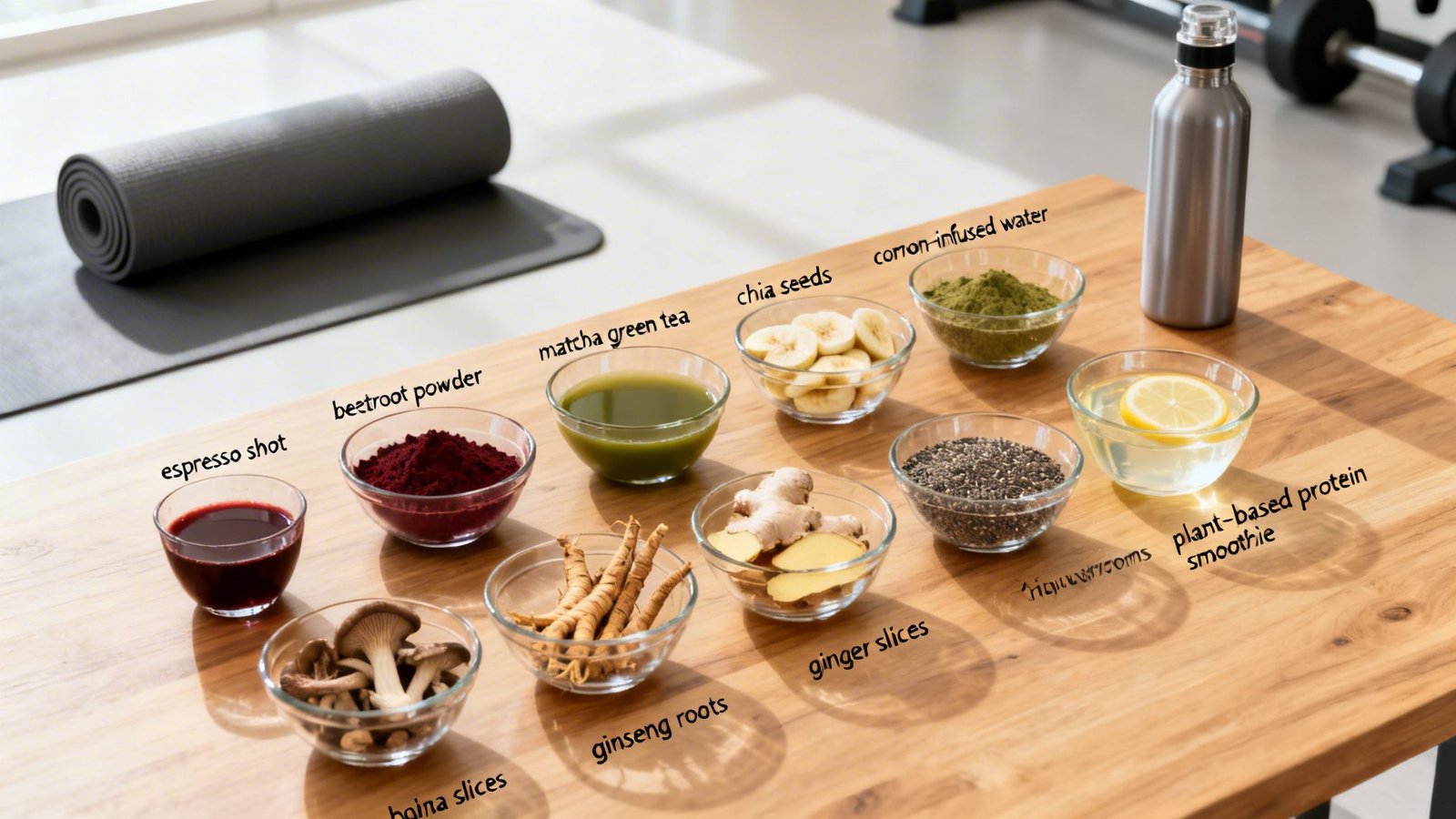
Chasing a new personal record or simply trying to survive a tough workout? Many turn to stimulant-heavy pre-workouts, but what if there was a better way? The search for sustainable performance often leads to natural energy boosters for workouts-methods that work with your body, not against it. This guide provides a detailed review of the 10 most effective, evidence-backed strategies and supplements that can give you a clean, powerful lift without the jitters or crash.
This is more than just a list; it's a practical toolkit for the at-home trainee and health-conscious athlete. We will examine the pros and cons of each booster, from the muscle-endurance benefits of Beta-Alanine to the cognitive clarity offered by an L-Theanine and caffeine stack. You will learn not just what works, but exactly how to implement these tools, including specific timing, dosages, and pairing suggestions for maximum impact.
Our goal is to arm you with the knowledge to build a pre-workout ritual that fuels consistent, long-term gains. This review will help you move beyond generic advice and find the specific, natural solutions that fit your fitness goals and lifestyle. Let's get started.
1. Beta-Alanine Review: The Endurance Enhancer
Beta-alanine is a non-essential amino acid that our bodies can produce. Unlike amino acids that build proteins, its primary function is to combine with histidine to produce carnosine, which is then stored in your muscles. This compound is one of the most effective natural energy boosters for workouts focused on endurance.
During high-intensity exercise, your muscles break down glucose into lactic acid, which then separates into lactate and hydrogen ions (H+). It's these hydrogen ions that lower the pH in your muscles, making them more acidic and causing the familiar "burn" that leads to fatigue. Carnosine acts as a buffer, soaking up these excess hydrogen ions and delaying the onset of muscle fatigue. This allows you to push harder for longer, whether you're squeezing out extra reps in a set of squats or sprinting through the final minute of a HIIT session.
How to Use Beta-Alanine
- Dosing Strategy: The clinically effective dose is 3.2–6.4 grams per day. To maximize muscle carnosine stores, it's best to take it daily, not just on workout days.
- Loading Phase: Many users start with a "loading phase" of 4–6 grams daily for the first two to four weeks to saturate their muscles with carnosine quickly. After that, a maintenance dose of around 3.2 grams is sufficient.
- Managing Paresthesia: A common, harmless side effect is a tingling sensation called paresthesia. To minimize this, split your daily dose into smaller 800–1600 mg servings taken every few hours.
Summary
Beta-alanine is a top-tier supplement for boosting muscular endurance. It works by increasing carnosine levels in muscles, which buffers acid buildup during intense exercise, delaying fatigue. Consistent daily dosing is key to saturating muscles for noticeable performance benefits.
Pros
- Scientifically proven to enhance performance in high-intensity efforts lasting 1-4 minutes.
- Delays muscle fatigue, allowing for more reps or longer sprints.
- Non-stimulant, making it stackable with other supplements.
Cons
- Can cause a harmless but sometimes uncomfortable tingling sensation (paresthesia).
- Requires a loading phase or several weeks of consistent use to become effective.
- Benefits are specific to high-intensity endurance, not maximal strength.
2. Beetroot Juice Review: The Circulation Supercharger
Beetroot juice is a powerhouse of dietary nitrates, which your body converts into nitric oxide. This crucial molecule relaxes and widens blood vessels, an effect known as vasodilation. Improved blood flow allows for more efficient oxygen and nutrient delivery to your working muscles. This makes it one of the most effective whole-food natural energy boosters for workouts, especially those demanding high stamina.
This enhanced circulation means your muscles can work harder for longer before fatiguing. It can also lower the perceived effort of an exercise, making challenging sessions feel more manageable. Athletes like marathon runners and cyclists often use beetroot to gain a competitive edge in endurance events. By improving oxygen efficiency, it helps delay the point of exhaustion, allowing for sustained performance from start to finish.
How to Use Beetroot Juice
- Dosing Strategy: For optimal effects, consume approximately 500ml (about 17oz) of standard beetroot juice or a more concentrated 70ml shot. Timing is key; aim to drink it 2-3 hours before your workout to allow for full nitrate-to-nitric-oxide conversion.
- Convenience Options: If juicing beets isn't practical, beetroot powder from Amazon is an excellent alternative. Simply mix a scoop into a pre-workout smoothie or water for a quick and easy nitrate boost.
- Preventing Tolerance: To maintain its effectiveness, consider cycling your intake. A common protocol is to use it for three weeks, followed by a one-week break, to prevent your body from adapting to the increased nitrate levels.
Summary
Beetroot juice acts as a natural nitric oxide booster, improving blood flow, oxygen delivery, and endurance. It's a whole-food approach to enhancing stamina and can make tough workouts feel easier.
Pros
- Improves cardiovascular efficiency and endurance.
- Natural, whole-food source of performance-enhancing nitrates.
- Can lower blood pressure and provide other cardiovascular benefits.
Cons
- Requires specific timing (2-3 hours pre-workout) for best effects.
- The taste can be an issue for some individuals.
- May cause beeturia (red or pink urine and stools), which is harmless but can be alarming.
3. Caffeine Review: Strategic Timing & Cycling
Caffeine is arguably the most researched and effective performance-enhancing substance available. It functions by blocking adenosine, a neurotransmitter that signals fatigue to your brain. This action provides an acute energy boost, sharpens focus, and can even improve your body's ability to burn fat during exercise. By using it strategically, caffeine becomes one of the most potent natural energy boosters for workouts, delivering consistent results without the downsides of tolerance or dependency.
Unlike random consumption, a structured caffeine protocol maximizes its benefits. When timed correctly, it increases alertness and reduces perceived effort, allowing you to push through difficult sets or maintain pace during endurance events. CrossFit athletes often time a coffee 45 minutes before a morning WOD to hit peak performance, while endurance runners calculate their intake for race day. This intentional approach turns a common daily habit into a powerful training tool, ensuring you get a reliable boost every time you need it.
How to Use Caffeine Strategically
- Dosing Strategy: The International Society of Sports Nutrition (ISSN) suggests a dose of 3–6 mg per kilogram of body weight. For a 70 kg (154 lb) person, this equals 210–420 mg, taken 30–60 minutes before your workout.
- Implement Cycling: To maintain sensitivity and avoid building a tolerance, cycle your intake. A common method is a "5 days on, 2 days off" schedule. This prevents your body from adapting, so the energizing effects remain strong.
- Timing is Key: Caffeine has a long half-life. To protect your sleep quality, which is crucial for recovery, avoid consuming it within 6-8 hours of your bedtime.
Summary
Caffeine is a powerful and reliable stimulant that boosts energy, focus, and performance. Strategic use, including proper dosing, timing, and cycling, is essential to maximize benefits and avoid drawbacks like tolerance and sleep disruption.
Pros
- Highly effective for increasing alertness, focus, and energy.
- Proven to reduce perceived effort and improve both strength and endurance.
- Widely available and inexpensive in various forms (coffee, pills from Amazon, etc.).
Cons
- Can cause jitters, anxiety, and stomach upset in sensitive individuals.
- High potential for tolerance, requiring cycling to maintain effectiveness.
- Can negatively impact sleep quality if taken too late in the day.
4. Creatine Monohydrate Review: The Power Output King
Creatine is a naturally occurring compound your body produces from amino acids, which is then stored in your muscles as phosphocreatine. This stored energy is crucial for regenerating ATP (adenosine triphosphate), the primary energy currency of your cells, during short, explosive efforts. Supplementing with creatine monohydrate saturates your muscles with phosphocreatine, making it one of the most effective natural energy boosters for workouts focused on strength and power.

This increased energy availability allows you to maintain peak power for longer and recover faster between intense sets. The effect is tangible: powerlifters can add significant weight to their lifts, CrossFitters can sustain intensity during a demanding WOD, and home trainees can push for extra reps on key exercises. It is arguably the most researched, proven, and cost-effective supplement for building muscle and enhancing strength.
How to Use Creatine Monohydrate
- Dosing Strategy: A daily dose of 5 grams is effective for most people. While a "loading phase" of 20 grams per day for 5-7 days can speed up muscle saturation, it is not required to see benefits. Consistency is the most important factor.
- Timing: Take your dose at any time of day that ensures you won't forget it. Many people mix it into a post-workout shake, but consistency matters more than the specific timing.
- Stay Hydrated: Creatine draws water into your muscle cells. To support this process and maintain overall hydration, aim to drink an additional 1-2 liters of water daily.
Summary
Creatine monohydrate is the most researched and effective supplement for increasing strength, power output, and muscle mass. It works by boosting the body's primary energy system for explosive movements. You can find quality-tested creatine monohydrate on Amazon.
Pros
- Extensively proven to increase strength, power, and lean muscle mass.
- Extremely safe for long-term use in healthy individuals.
- Very inexpensive and widely available.
Cons
- Can cause a slight increase in water weight, particularly in the initial weeks.
- Requires consistent daily intake; it does not provide an acute, immediate boost.
- May cause minor gastrointestinal distress if taken without enough water.
5. Strategic Sleep Optimization & Recovery Rituals
Sleep is perhaps the most powerful, yet most underrated, foundational habit for physical performance. During deep sleep, your body enters a critical repair state, releasing growth hormone, synthesizing muscle protein, and restoring the neurotransmitters essential for motivation and motor control. Optimizing both the quality and quantity of your sleep provides one of the most significant natural energy boosters for workouts, directly impacting your strength, endurance, and overall drive more profoundly than many supplements.

Unlike a pill or powder, this approach costs nothing but requires intentional behavioral change. When you prioritize rest, you are not being lazy; you are actively programming your body for peak performance. Professional athletes like LeBron James and Roger Federer are known to sleep 10-12 hours per night, recognizing it as a non-negotiable part of their training regimen. This commitment to recovery is as crucial as their time spent on the court.
How to Use Strategic Sleep
- Dosing Strategy: Aim for a consistent 7–9 hours of quality sleep per night. Track your sleep duration and workout performance for three weeks to notice a clear connection between rest and energy.
- Consistency Is Key: Establish a fixed bedtime and wake-up time, even on weekends. This reinforces your body's natural circadian rhythm, making it easier to fall asleep and wake up feeling refreshed.
- Create a Sleep Sanctuary: Engineer your environment for optimal rest. Keep your room cool (65-68°F), achieve total darkness with blackout curtains, and consider a white noise machine or fan to mask disruptive sounds.
Summary
Prioritizing consistent, high-quality sleep is the most powerful natural method for boosting energy, recovery, and workout performance. It requires behavioral discipline but provides unparalleled benefits for physical and mental restoration.
Pros
- Completely free and has the largest impact on recovery and next-day energy.
- Improves hormone regulation, muscle repair, and cognitive function.
- Benefits every aspect of health, not just workout performance.
Cons
- Requires significant discipline and lifestyle adjustments.
- Results are not "acute" but built over time with consistency.
- Can be difficult to achieve for those with busy schedules or sleep disorders.
6. Carbohydrate Timing Review: The Fuel for Performance
Carbohydrates are your body's primary and most efficient fuel source for moderate to high-intensity exercise. Unlike stimulants that merely trick your brain into feeling energized, strategically consuming carbs provides the actual fuel, glucose, that your muscles need for rapid energy production (ATP). This food-first approach makes carbohydrate timing one of the most fundamental natural energy boosters for workouts.
When you exercise, your muscles draw upon stored glucose, known as glycogen. As these stores deplete, performance drops, fatigue sets in, and your body may start breaking down muscle protein for energy. By timing your carbohydrate intake correctly, you ensure your glycogen stores are topped off before you start and are replenished during longer sessions. This sustains energy, prevents a mid-workout crash, and spares muscle tissue, allowing you to train harder and recover faster. This is especially crucial for home trainees managing multiple workouts per week.
How to Use Carbohydrate Timing
- Pre-Workout Fueling: Consume 40–80 grams of easily digestible carbohydrates 60–90 minutes before your workout. Examples include a cup of oatmeal with honey, two rice cakes with jam, or a large banana.
- Intra-Workout Fueling: For workouts lasting longer than 75 minutes, consume 30–60 grams of carbohydrates per hour. This can come from sports drinks, energy gels, or natural sources like dates.
- Food Choices: Before and during exercise, choose carbohydrates that are low in fat and fiber to prevent gastrointestinal distress. Pair your pre-workout carbs with a small amount of protein (15–30g) to support muscle function.
Summary
Strategically timing carbohydrate intake is crucial for fueling workouts, sustaining energy, and preventing performance drops. Consuming easily digestible carbs before and during long workouts ensures muscle glycogen stores are available for fuel.
Pros
- Directly provides the fuel muscles need for high-intensity work.
- Prevents mid-workout energy crashes and preserves muscle mass.
- Highly customizable based on workout intensity and duration.
Cons
- Requires planning and preparation.
- Incorrect food choices (high fat/fiber) can cause digestive issues.
- Overconsumption can lead to unwanted fat gain if not balanced with overall energy expenditure.
7. L-Theanine + Caffeine Stack Review: The Smart Stimulant
L-theanine is an amino acid primarily found in green and black tea. On its own, it promotes relaxation without drowsiness, but its real power is unlocked when paired with caffeine. This combination creates a synergistic effect, providing clean, focused energy without the anxiety or jitters often associated with caffeine alone, making it one of the most effective natural energy boosters for workouts where mental clarity is key.
The stack works by allowing L-theanine to smooth out caffeine’s rough edges. While caffeine blocks adenosine receptors to fight fatigue, L-theanine increases alpha brain waves, which are linked to a state of "wakeful relaxation." The result is the alertness from caffeine combined with the calm focus from L-theanine. This is perfect for improving mind-muscle connection during complex lifts or maintaining concentration through a long training session, preventing the common pre-workout "crash" afterward.
How to Use the L-Theanine + Caffeine Stack
- Dosing Strategy: The most studied and effective ratio is 2:1, L-theanine to caffeine. A typical starting dose is 100-200 mg of L-theanine with 50-100 mg of caffeine, taken 30-45 minutes before your workout.
- Adjust for Sensitivity: If you are sensitive to stimulants, begin with a lower dose, such as 50 mg of L-theanine and 25 mg of caffeine, to assess your tolerance.
- Natural Alternative: For a less precise but natural approach, simply steep a bag of green tea for 3-5 minutes. This provides a naturally occurring combination of both compounds.
Summary
Combining L-theanine with caffeine creates "smart" stimulation, providing the energy and focus of caffeine while mitigating the jitters and anxiety. This synergistic stack is ideal for workouts requiring mental clarity. Both supplements are readily available on Amazon.
Pros
- Provides smooth, focused energy without the typical caffeine crash.
- Reduces anxiety and jitters associated with stimulants.
- Enhances cognitive function and mind-muscle connection during training.
Cons
- Requires purchasing and dosing two separate supplements (unless using pre-formulated Amazon products).
- Effectiveness depends on finding the right personal dosage ratio.
- May slightly blunt the peak "jolt" of caffeine, which some users prefer.
8. Green Tea Extract / EGCG Review: The Subtle Stimulant
Green tea extract, specifically its most active polyphenol, epigallocatechin gallate (EGCG), is a compound that offers a gentle boost in workout capacity. Instead of a jarring jolt of energy, EGCG works by increasing fat oxidation, meaning your body becomes more efficient at using stored fat for fuel during exercise. This metabolic shift helps preserve muscle glycogen, which can improve endurance.
This mechanism makes it one of the most effective natural energy boosters for workouts aimed at fat loss and sustained cardio performance. The combination of EGCG and the naturally occurring low dose of caffeine in green tea provides mental clarity and sustained energy without the intense crash associated with high-stimulant pre-workouts. This is ideal for morning workouts or for individuals sensitive to caffeine who still want a performance edge. For instance, someone on a fat loss plan might use it before a morning jog to maximize fat burning.
How to Use Green Tea Extract / EGCG
- Dosing Strategy: Aim for a daily intake of 300–400 mg of EGCG. This can be achieved through one to two high-quality extract capsules or by drinking two to three cups of well-brewed green tea.
- Timing for Fat Oxidation: For best results targeting fat metabolism, consume your dose 30–60 minutes before engaging in moderate-intensity cardio.
- Consistency Over Timing: While pre-workout timing is beneficial, daily consistency is more important for raising overall EGCG levels in your system. Assess its effects after three weeks of consistent daily use.
Summary
Green tea extract, rich in EGCG, provides a mild energy boost and enhances the body's ability to burn fat for fuel. It's an excellent choice for caffeine-sensitive individuals or those focused on endurance and fat loss. EGCG supplements can be found on Amazon.
Pros
- Offers a gentle, non-jittery energy boost.
- Promotes fat oxidation, which can aid in fat loss and spare muscle glycogen.
- Provides significant antioxidant and other health benefits.
Cons
- The energy boost is much subtler than caffeine.
- High doses, especially on an empty stomach, can potentially cause liver stress in rare cases.
- Benefits are more noticeable with consistent, long-term use rather than as an acute pre-workout.
9. Electrolyte Balance & Hydration Protocol Review
Proper hydration is more than just drinking water; it's about maintaining a precise balance of electrolytes. These minerals, including sodium, potassium, and magnesium, are fundamental for nerve signaling and muscle contractions. Even a small drop in hydration (2-3% of body weight) can seriously reduce strength, endurance, and mental focus, making this protocol one of the most foundational natural energy boosters for workouts.
When you sweat, you lose both water and electrolytes. Failing to replace them disrupts your body’s internal electrical system, leading to premature fatigue, muscle cramps, and diminished power output. A strategic hydration plan ensures your cellular machinery runs smoothly, allowing you to sustain high-intensity effort. For instance, many home trainees weigh themselves before and after a workout to calculate their personal sweat rate (a 1-pound loss equals about 500 ml of fluid) and tailor their intake accordingly.
How to Use an Electrolyte & Hydration Protocol
- Pre-Workout Hydration: Start hydrating early. Drink 500–1000 ml of water two to four hours before your session. If you train in the morning, having electrolytes with your breakfast can ensure you start your workout fully prepared.
- Intra-Workout Fueling: For workouts lasting over 60 minutes, aim to consume 200–300 ml of fluid every 15–20 minutes. This fluid should contain 300–600 mg of sodium per hour, which can be sourced from sports drinks, electrolyte powders, or even salty snacks.
- Daily Mineral Intake: Focus on getting enough key electrolytes throughout the day. Target 400–600 mg of potassium and 25–100 mg of magnesium, either from whole foods like bananas and leafy greens or from a dedicated supplement.
Summary
Maintaining proper hydration and electrolyte balance is critical for preventing fatigue, cramps, and performance decline. A proactive protocol involving water and key minerals like sodium, potassium, and magnesium is essential for all athletes.
Pros
- Fundamentally supports all aspects of performance, from muscle contraction to nerve function.
- Directly prevents dehydration-induced fatigue and strength loss.
- Easy to implement with water and widely available electrolyte powders from Amazon.
Cons
- Requires conscious effort and planning; it's easy to forget until it's too late.
- Individual needs can vary greatly based on sweat rate and climate.
- Over-hydrating with plain water without electrolytes can lead to hyponatremia.
10. Rhodiola Rosea Review: The Adaptogenic Stress Reducer
Rhodiola rosea is an adaptogenic herb revered in traditional medicine for its ability to increase the body's resilience to physical and psychological stress. Unlike stimulants that provide a temporary jolt, rhodiola helps your body manage its own energy systems more efficiently. This makes it one of the most effective natural energy boosters for workouts, especially for those juggling demanding training schedules with life's other pressures.
The herb works by influencing key physiological pathways related to stress response, including the HPA axis (hypothalamus-pituitary-adrenal). It helps regulate the release of stress hormones like cortisol, preventing the mental and physical drain associated with chronic stress and intense training. By reducing the perception of fatigue, it allows you to maintain focus and effort during a tough workout, even after a long day at work or during periods of high training volume. This makes it ideal for athletes seeking sustained performance without the jitters or crash from caffeine.
How to Use Rhodiola Rosea
- Dosing Strategy: A standard dose is 300–600 mg per day. Look for extracts standardized to contain at least 3% rosavins and 1% salidroside, which are its primary active compounds.
- Timing and Consistency: Take it in the morning, with or without food, to support energy and focus throughout the day. Adaptogens work best with consistent use; allow 3-4 weeks to assess its full benefits, as a single dose is not effective for performance.
- Best For: This herb is particularly useful for managing accumulated fatigue. It is a great choice for individuals whose training performance is suffering due to high life stress, overtraining, or demanding work schedules like night shifts.
Summary
Rhodiola rosea is an adaptogenic herb that helps the body resist physical and mental stress, reducing fatigue and improving focus. It's a non-stimulant option for enhancing resilience and energy, particularly for those dealing with high stress or accumulated fatigue. You can buy standardized extracts on Amazon.
Pros
- Reduces perception of fatigue and improves mental performance under stress.
- Non-stimulant, so it won't cause jitters or disrupt sleep.
- Supports the body's overall stress response system.
Cons
- Effects are subtle and build over weeks of consistent use.
- Does not provide an acute, powerful energy jolt like caffeine.
- Effectiveness can vary, and quality (standardized extract) is crucial.
Conclusion
As we've explored the best natural energy boosters for workouts, a central theme emerges: sustainable, high-level performance is not built on a single supplement or quick fix. Instead, it is the result of a thoughtful, personalized strategy that stacks foundational habits with targeted, evidence-backed compounds. Your journey to unlocking your full potential begins not in a supplement bottle, but with mastering the fundamentals of sleep and hydration. These are the non-negotiable pillars that support every other effort.
Once those are securely in place, you can begin layering in specific tools from this list to address your unique goals. Think of it as constructing a high-performance system, piece by piece. Start with essentials like Creatine Monohydrate for power and Carbohydrate Timing for fuel. Then, fine-tune with acute boosters like a Caffeine/L-Theanine stack or endurance aids like Beetroot Juice. For managing overall fatigue, an adaptogen like Rhodiola Rosea can be invaluable.
The most effective approach is to start with a solid foundation and introduce only one new supplement or strategy at a time, giving your body at least two to three weeks to adapt before assessing its impact. This methodical process allows you to identify what truly works for you, creating a reliable and potent stack of natural energy boosters for workouts that you can depend on for the long haul. Ultimately, mastering these natural methods gives you control over your energy and performance, leading to greater health, resilience, and long-term fitness success.
Frequently Asked Questions (FAQ)
Q1: What is the single best natural energy booster for workouts?
A1: There is no single "best" one, as it depends on your goals. For strength and power, Creatine Monohydrate is unparalleled. For immediate energy and focus, Caffeine is most effective. For overall health and sustained energy, strategic Sleep is the most powerful tool.
Q2: Can I combine these natural energy boosters?
A2: Yes, many of these boosters work very well together. A common and effective "stack" is Creatine (for long-term strength), timed Carbohydrates (for fuel), and a pre-workout Caffeine + L-Theanine combo (for acute energy and focus). Always ensure you are well-hydrated with electrolytes.
Q3: Are these natural boosters from Amazon safe?
A3: The items on this list, such as creatine, caffeine, and beta-alanine, have been extensively studied and are considered safe for most healthy individuals when used at the recommended dosages. Always choose reputable Amazon brands that use third-party testing for purity and quality. If you have any pre-existing health conditions, consult with a doctor before starting a new supplement.
Q4: How long does it take to feel the effects of these boosters?
A4: It varies. Acute boosters like Caffeine provide energy within 30-60 minutes. Others like Creatine, Beta-Alanine, and Rhodiola Rosea require a "loading" or saturation period, and their benefits become noticeable after 2-4 weeks of consistent daily use.
Q5: Do I need to take these on my rest days?
A5: It depends on the supplement. For those that require muscle saturation (Creatine and Beta-Alanine), yes, you should take them daily, even on rest days, to maintain optimal levels. For acute boosters like Caffeine or Beetroot Juice, you only need to take them before a workout.
Navigating the crowded supplement market can be overwhelming, especially with so many products making bold claims. For honest, in-depth analyses and head-to-head comparisons of the market's top options, visit Energy Supplement Reviews. Our team provides detailed product reviews to help you make an informed decision and find the perfect supplement for your fitness goals.
