


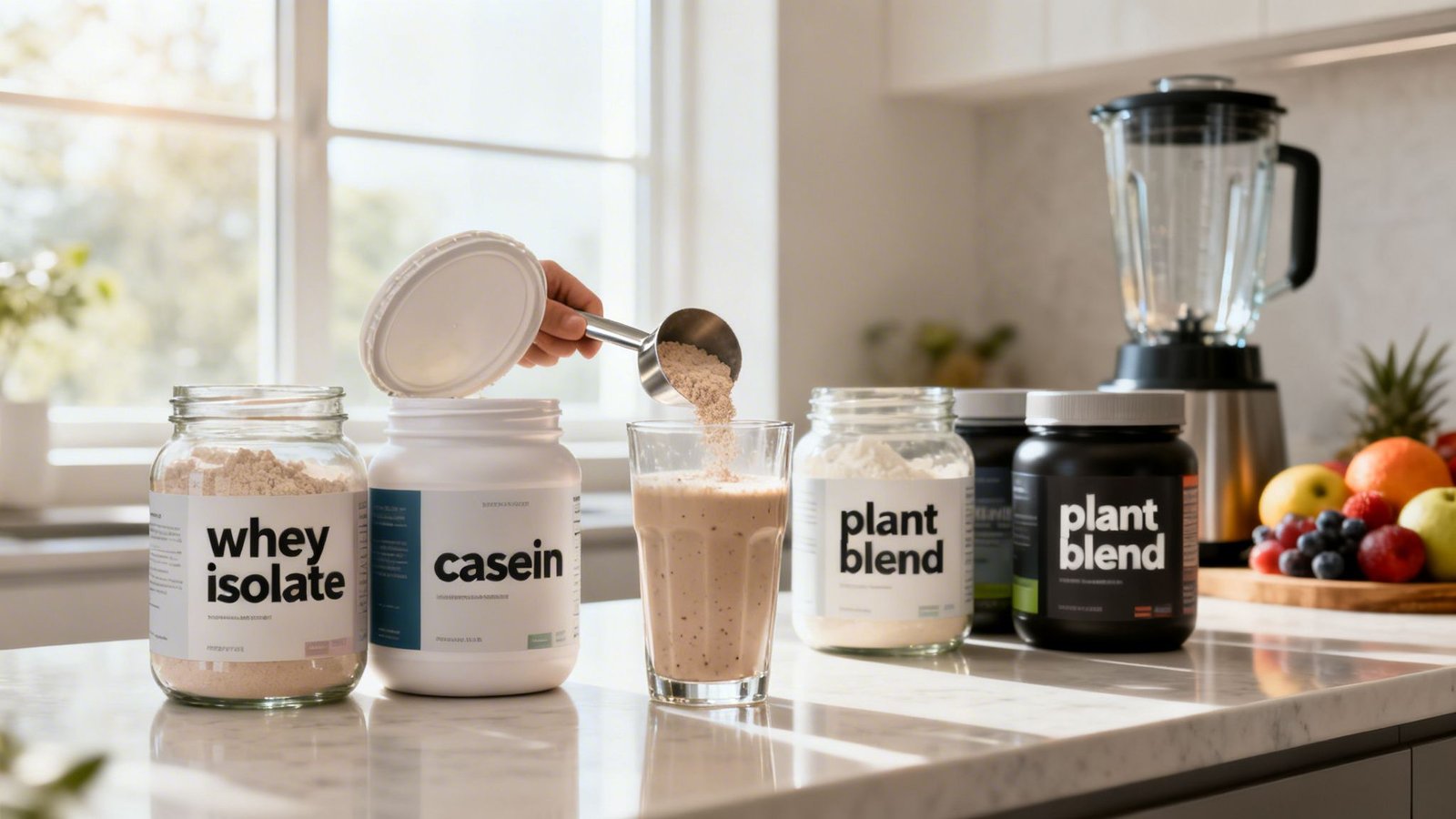
Ever stood in the supplement aisle, staring at a wall of protein powders and feeling completely overwhelmed? I get it. With hundreds of tubs all screaming different promises, it’s tough to know where to even start. This guide is here to cut through that noise and give you a straight-up, practical path to finding the right protein for your goals, your body, and your wallet.
The protein market is absolutely booming. It was a USD 28.8 billion industry in 2025 and is on track to more than double to USD 59.9 billion by 2035.
So, what does this mean for you? While classic whey protein still holds a huge 48% of the market, the real story is the explosion in plant-based options, which now make up a staggering 68.2% of the protein source segment. This shift has forced brands to innovate, giving you better quality, more variety, and more competitive pricing than ever before. You can dig deeper into these market trends and what they mean for consumers.
Quick Guide to Protein Powder Types
Before we get into the nitty-gritty of reading labels and checking for quality, let's start with a simple overview. Think of this as your cheat sheet for narrowing down the options right away.
Key Takeaway: The "best" protein isn't universal; it's personal. It depends on your dietary needs, how your body digests different ingredients, and what you're trying to achieve with your fitness and nutrition.
This table breaks down the most common protein sources to help you quickly see which one might be the best fit for your main goal.
| Protein Type | Best For | Digestion Speed | Key Feature |
|---|---|---|---|
| Whey Protein | Post-workout muscle repair and growth | Fast | Contains all essential amino acids (BCAAs) |
| Casein Protein | Sustained protein release (e.g., before bed) | Slow | Forms a gel in the stomach, promoting fullness |
| Plant-Based | Vegan diets or dairy-sensitive individuals | Varies | Often hypoallergenic and rich in fiber |
| Collagen Peptides | Supporting joint, skin, and hair health | Fast | High in specific amino acids for connective tissue |
Choosing the right protein can honestly be a game-changer. Whether you need something to help your muscles recover, keep you full between meals, or just offer a quick and healthy option on a hectic day, there’s a perfect match out there for you. My aim here is to give you the confidence to walk that aisle, read the labels like a pro, and make a choice you feel great about. Let’s get to it.
Matching Your Protein to Your Fitness Goals
Before you even think about brands or flavors, the first thing you need to pin down is why you want a protein powder in the first place. This isn't a one-size-fits-all supplement; the "best" protein is simply the one that actually helps you reach your specific goals. Think of your goal as the compass that will point you toward the right tub.
Are you in the gym trying to pack on muscle? Maybe you’re looking to manage your weight and curb cravings. Or perhaps you just need a quick, healthy meal on a hectic day. Each of these paths leads to a different type of protein.
Protein for Building Muscle
If your main focus is building strength and lean muscle, you need to think about speed and quality. After a tough workout, your muscles are screaming for repair, a process called muscle protein synthesis. To kickstart it, you need to get the right building blocks—amino acids—to your muscles as fast as possible.
This is where whey protein isolate really stands out. It's a super-filtered form of whey that digests incredibly fast, sending a rush of essential amino acids right where they're needed. It’s particularly high in leucine, the key amino acid that flips the switch for muscle repair. Aiming for 20-30 grams of protein after your workout is a tried-and-true strategy for most people. The timing of that shake can be a whole topic on its own, and you can get some expert advice on whether you should take protein during a workout if you want to dive deeper.
This flowchart is a great visual for seeing how your goal connects directly to a protein type.

As you can see, whether you're focused on muscle growth, weight management, or sticking to a vegan diet, there's a clear path to the protein that will serve you best.
Support for Weight Management
When weight management is the priority, the game changes. Instead of speed, you want a protein that promotes satiety—the feeling of being full and satisfied. The whole point is to feel fuller for longer, which naturally helps you manage cravings and cut down on overall calorie intake. Protein is the undisputed champ of macronutrients when it to keeping you full.
For this, slow-digesting proteins are your best bet.
- Casein Protein: This is the other protein from milk, but it behaves very differently from whey. It forms a gel in your stomach, releasing amino acids slowly over several hours. This makes it perfect for a meal replacement or a snack before bed to keep late-night hunger pangs away.
- High-Fiber Plant Blends: Many plant-based proteins made from pea, hemp, or brown rice come with a healthy dose of fiber. This one-two punch of protein and fiber is fantastic for promoting fullness and keeping your blood sugar stable.
I’ve seen this mistake so many times: someone buys a "weight loss" protein that's secretly packed with sugar. Always flip the tub around and check the label. You're looking for high protein and low sugar to stay full without adding empty calories that will just sabotage your progress.
Convenience as a Meal Replacement
Let’s be real, life gets busy. For anyone needing a nutritious meal on the run, a protein shake can be a total game-changer. But just shaking up a scoop of whey with water isn't a meal; it's a snack. A real meal replacement needs to be more nutritionally complete.
To turn that shake into a proper meal, you need a good mix of protein, healthy fats, and complex carbs. You can either look for a powder specifically blended for this purpose or, my personal preference, build it yourself.
For example, a busy professional could throw a scoop of plant-based protein, a frozen banana (for carbs and creaminess), a big handful of spinach, and a spoonful of almond butter (for healthy fats) into a blender. It takes two minutes to make and gives you a balanced, satisfying meal that will actually keep you going.
Decoding the Nutrition Label Like a Pro

Forget the flashy claims on the front of the tub. The real story is always on the back, tucked away in the nutrition facts panel. Learning to read that label is the single most important skill you can develop to find a protein powder that actually works.
This is where you see if you're buying a high-performance supplement or a tub of cleverly disguised sugar and filler. Once you know the signs, you can compare two products in seconds and know which one is the real deal. Let's walk through what I look for.
The Protein-to-Scoop Ratio
First things first: how much protein are you actually getting? A big "30 grams of protein!" on the label can be misleading if it comes from a giant scoop. I always do a quick bit of math to find the true protein percentage.
It's simple: divide the grams of protein by the serving size in grams (the scoop size), then multiply by 100.
For instance, a powder with 25 grams of protein in a 32-gram scoop gives you a solid 78% protein (25 ÷ 32 x 100). But what about a brand that boasts 30 grams of protein, but uses a 45-gram scoop? That one is only 67% protein (30 ÷ 45 x 100). The first option is clearly more potent and gives you less filler for your money.
As a rule of thumb, I look for powders that are at least 80% protein, especially for an isolate. Anything under 70% is a red flag that you're paying a premium for carbs, fats, and other additives.
Watch Out for Sneaky Sugars and Junk
Next, I scan the label for things that can work against my goals. It’s incredibly common for companies to load up their powders with cheap fillers to add bulk and artificial sweeteners to make them hyper-palatable.
Your eyes should go straight to the "Total Carbohydrate" and "Total Sugars" lines. A quality product will have less than 5 grams of carbs and ideally just 1-2 grams of sugar per serving. Pay close attention to "added sugars"—these are just empty calories that can mess with your energy levels.
Also, be on the lookout for these common offenders in the ingredients list:
- Maltodextrin: A cheap, highly processed carb that can spike your blood sugar just like sugar.
- Thickeners and Gums: Things like Xanthan Gum or Carrageenan are used for a creamier texture but can cause bloating and digestive issues for many people.
- Artificial Sweeteners: While calorie-free, things like Sucralose and Aspartame can negatively impact some people's gut health according to emerging research.
Honestly, the shorter and cleaner the ingredient list, the better. If you can pronounce everything on there, you're probably holding a winner.
Don't Forget the Amino Acids
For anyone serious about muscle growth and recovery, this part is non-negotiable. Amino acids are what make up protein, but one in particular, leucine, is the master switch that tells your body to start repairing and building muscle.
Leucine is a Branched-Chain Amino Acid (BCAA) that directly triggers a process called muscle protein synthesis. For your post-workout shake to do its job, it has to contain enough leucine to flip that switch.
Not all brands list their full amino acid profile, but the ones that do are showing you they have confidence in their formula. Aim for a powder that delivers at least 2.5 grams of leucine per scoop. This dose ensures you’re getting that powerful muscle-building signal every time. A complete amino acid profile is a true sign of quality, whether it's from whey or a thoughtfully designed plant blend.
Comparing Protein Sources: Whey, Casein, and Plant-Based Options
Alright, you know how to read the label, so let's get into the good stuff: what's actually in the tub. Choosing the "best" protein isn't about finding a single magic bullet; it's about matching the right tool to your body, your diet, and your goals.
We'll break down the major players, starting with the classic dairy proteins—whey and casein—before diving into the impressive world of plant-based options. Getting a handle on these differences is the key to making a smart purchase.
The Dairy Duo: Whey and Casein
Milk actually gives us two incredible, high-quality proteins: whey makes up about 20% of it, and casein is the other 80%. Both are "complete" proteins, which just means they have all nine essential amino acids your body can't make on its own. But here's the crucial part: they act very differently once you drink them.
Whey protein is the sprinter. It’s famous for digesting incredibly fast, flooding your muscles with the amino acids they're screaming for after a tough workout. This is why it's the go-to for post-workout recovery. You'll typically see it in three main forms:
- Whey Concentrate: This is the most basic and often most affordable form. It has a solid amount of protein but keeps some of the natural fat and lactose (milk sugar), which gives it a nice, creamy taste. A great starting point if you're on a budget and digest dairy well.
- Whey Isolate: Think of this as a more refined version. Extra filtering removes most of the fat and lactose, bumping the protein content way up—often over 90%. It’s an excellent choice if you're watching your carbs or have a mild lactose sensitivity.
- Whey Hydrolysate: This is whey that has been "pre-digested," broken down into smaller pieces for the absolute fastest absorption possible. It's incredibly effective but also the priciest of the three and can sometimes have a slightly bitter aftertaste.
Then you have casein, the marathon runner of the protein world. It forms a gel in your stomach, which sounds weird, but it means you get a slow, steady drip of amino acids over several hours. This makes it an absolute champ for keeping you full or for taking before bed to prevent muscle breakdown and feed recovery while you sleep. For more tips on optimizing that overnight repair process, check out our guide on the best supplements for workout recovery.
The Rise of Plant-Based Proteins
The plant-based protein scene has completely transformed over the last few years. Gone are the days of gritty, chalky powders that tasted like dirt. For anyone who is vegan, has a dairy allergy, or is lactose intolerant, today's options are game-changers.
The old knock against plant proteins was that a single source, like rice, was "incomplete." But modern brands have gotten smart, creating sophisticated plant-based blends that combine different sources (like pea and rice) to build a complete amino acid profile that can absolutely hold its own against whey.
Some of the most popular sources you'll see are:
- Pea Protein: A powerhouse for BCAAs (Branch-Chain Amino Acids), especially arginine. It's also hypoallergenic and generally very easy on the stomach.
- Brown Rice Protein: A solid protein source that perfectly complements pea protein to create that complete amino acid spectrum.
- Hemp Protein: While a bit lower in protein concentration, it brings healthy omega-3 and omega-6 fatty acids and a good dose of fiber to the table.
- Soy Protein: One of the few plant-based options that's a complete protein all by itself. Its amino acid profile is remarkably similar to whey.
The shift toward clean, simple ingredients is impossible to ignore. The natural protein powder market was valued at USD 6.33 billion in 2025 and is projected to more than double, hitting USD 13.84 billion by 2034. This consumer demand is forcing brands to be more transparent and produce higher-quality, minimally processed powders. You can see more data on this growing demand for clean-label supplements on grandviewresearch.com.
Niche and Specialty Proteins
Beyond the big three, a few other specialty proteins have carved out their own space, usually to solve a very specific dietary problem.
Egg White Protein: Just what it sounds like—protein made from dried egg whites. It’s a fantastic, dairy-free complete protein that digests at a moderate speed, making it a great all-rounder if you have milk allergies.
Beef Protein Isolate: This is derived from beef but has been heavily filtered to remove the vast majority of fat and cholesterol. It’s naturally rich in creatine and, of course, completely dairy- and lactose-free, making it a popular choice in the paleo community.
To help you visualize how these different types stack up in the real world, here’s a quick breakdown of some popular product types you’ll find on Amazon.
Protein Product Review Pros and Cons
This table compares the major protein categories to help you see, at a glance, which one might be the best fit for your specific needs and preferences.
| Amazon Product Example | Pros | Cons | Summary Review |
|---|---|---|---|
| Whey Isolate | High protein-per-scoop, very low in lactose and fat, absorbs quickly for post-workout. | More expensive than concentrate, can be too thin for some tastes. | Best for serious athletes or those with mild dairy sensitivity wanting maximum protein purity. |
| Casein | Digests slowly, excellent for satiety and overnight recovery, typically has a thick, creamy texture. | Not ideal for post-workout due to slow absorption, can cause bloating in some individuals. | A great choice for a meal replacement shake or to prevent muscle breakdown during sleep. |
| Plant-Based Blend | Vegan-friendly, hypoallergenic, often contains added fiber and nutrients from its sources. | Can have a grittier texture than whey, sometimes lower in leucine unless specifically fortified. | The perfect option for anyone with dairy issues or on a plant-based diet, offering a complete protein profile. |
Ultimately, seeing the pros and cons side-by-side makes it clearer that the "best" protein is simply the one that aligns with your digestion, budget, and fitness schedule.
Verifying Quality and Safety: A Look at Third-Party Testing
Let's be honest: the supplement industry can feel a bit like the Wild West. Because it's not tightly regulated, you can't always trust what's written on the front of the tub. This is where third-party testing comes in—it’s your single best tool for cutting through the marketing hype and finding a product that’s both safe and effective.
These independent labs do two critical things. First, they check if the product actually contains the amount of protein it claims. Second, they screen for things you don't want, like harmful contaminants or substances banned in sports. This isn't just a concern for elite athletes; it's about having peace of mind that you’re putting a clean, honest product into your body.
Decoding the Logos on the Label
When you’re standing in the aisle looking at a wall of options, your first move should be to scan the packaging for certification seals. A brand that invests in this process is showing you they’re serious about quality and aren’t afraid to have their formula inspected.
Here are the big ones to look for:
- NSF Certified for Sport: This is widely considered the gold standard. It confirms the label is accurate, tests for over 270 banned substances, and even audits the manufacturing facility every year.
- Informed-Choice / Informed-Sport: If you see this logo, it means every single batch of that product has been tested for banned substances before hitting the shelves. It’s a rock-solid guarantee of a clean supplement.
- BSCG (Banned Substances Control Group): Another top-tier program that provides robust testing against performance-enhancing drugs and other potentially harmful agents.
A third-party seal isn't just about avoiding banned substances. It's a guarantee of potency and purity. It means an unbiased lab has confirmed that you are actually getting the 25 grams of protein you're paying for and not a scoop full of fillers.
Reading Between the Lines of Customer Reviews
While official certifications are your best bet for verifying safety, real-world feedback from customers on sites like Amazon can offer clues you won't find in a lab report. Think of it as your secondary source of intel.
But don’t just glance at the star rating. You have to dig into the actual comments and look for patterns. Are dozens of people raving about how smoothly it mixes? Or is there a common thread of complaints about bloating, clumping, or a weird chemical aftertaste? This is where you can spot potential quality control issues that a lab test might not catch.
The supplement market is absolutely massive—North America's protein supplement market alone was valued at USD 1,253.43 billion in 2025. That intense competition has pushed many brands toward higher quality standards, especially as products become more mainstream. In fact, 31% of children in the U.S. now take dietary supplements, which shows just how integrated they are in family health. You can find more details in this protein supplement market report from MMR Statistics.
By combining the hard proof of third-party testing with the social proof from real user reviews, you build a much stronger vetting process. It’s a two-pronged approach that ensures you’re spending your money on a safe, high-quality product that actually delivers.
The Final Checks: Budget, Flavor, and Mixability

Alright, you've narrowed down your options based on your goals and the science. Now for the practical stuff—the details that decide if that tub of protein becomes a staple or just gathers dust in your pantry. Let's talk about budget, flavor, and mixability.
When it comes to price, a cheaper tub isn't automatically the better deal. What you really need to figure out is the cost per serving of protein.
Pro Tip: Don't just look at the sticker price. Divide the total cost by the total grams of protein in the container (servings per container × grams of protein per serving). This gives you the true cost and makes it easy to compare apples to apples.
For instance, a $50 tub with 30 servings of 25g protein contains 750g of protein total. That works out to about 6.7 cents per gram. A cheaper-looking $40 tub with 25 servings of 20g protein only has 500g total, making it 8 cents per gram. In this case, the tub with the higher price tag is the smarter buy.
Finding a Flavor You’ll Actually Enjoy
Let’s be honest: even the most effective protein powder is useless if you have to choke it down. Flavor fatigue is a real thing, and you don’t want to end up dreading your post-workout shake. I always suggest looking for brands that sell single-serving packets so you can try a few before committing to a giant 5-pound tub.
When you're scanning reviews, learn to read between the lines. Vague comments like "tastes great!" don't tell you much. Instead, look for specifics:
- Sweetness Level: Are people calling it "sickeningly sweet" or "perfectly balanced"? Keywords like "too much sucralose" or "subtle flavor" are gold.
- Artificial Aftertaste: Any mention of a "chemical" or "metallic" finish is a huge red flag. That usually points to cheap sweeteners.
- Versatility: Does the flavor hold up with just water, or do reviewers say it needs fruit and milk to be drinkable?
If you're new to protein powders and want some reliable, crowd-pleasing options to start with, our guide on the best protein powder for beginners is a great place to find some solid recommendations.
The All-Important Mixability Test
Finally, mixability. Nothing ruins a perfectly good shake like a mouthful of gritty, chalky clumps. A quality protein should dissolve easily with just a shaker bottle and a bit of effort.
As a general rule, whey isolates and hydrolysates mix the best because they are so finely filtered. Plant-based proteins have come a long way, but some can still have a slightly grainier texture. Again, reviews are your best friend here. Search for terms like "mixability," "clumps," or "texture" to get a clear picture. And trust me, a simple blender ball in your shaker cup can make a world of difference.
Summary and Conclusion
Navigating the world of protein powders can feel overwhelming, but it really boils down to just a few key decisions. Now that you know how to match a protein to your goals, read a label like a pro, and tell the difference between whey, casein, and plant-based options, you have everything you need to choose with confidence.
The best protein powder isn’t some magic formula; it’s the one you’ll actually use consistently because it works for your body, your budget, and your taste buds. Think of this guide as your game plan. Refer back to it whenever you need a refresher, and trust your gut. You’re ready to find a protein powder that genuinely supports your health and becomes a seamless part of your daily routine.
Frequently Asked Questions (FAQs)
Even after you've narrowed down your choices, a few questions always seem to pop up. Let's tackle some of the most common ones I hear from people just starting out.
When Is the Best Time to Drink a Protein Shake?
The old gym lore says you need to slam a shake within 30-60 minutes of your last rep. While that's not a bad habit—especially since you might be hungry then anyway—the research is clear: your total protein intake over the entire day is what really drives muscle growth and recovery. Think of that post-workout shake as a convenient way to get started on your daily goal. A shake works just as well mixed into your morning oatmeal, as a quick afternoon snack to beat a craving, or even before bed. A slow-digesting casein protein is especially great for that last one.
Can I Use Protein Powder If I’m Not Working Out?
Absolutely. It’s a common misconception that protein powder is only for bodybuilders. It’s really just a concentrated food source, designed to make getting enough protein easier and more convenient. If your diet is a little light on protein or you need help staying full between meals for weight management, a protein shake is a fantastic tool. It supports everything from immune function to healthy hair and skin, not just muscle. Think of protein powder as a food supplement, not just a workout supplement.
How Much Protein Do I Need Per Day?
For active people, a solid target is somewhere between 1.2 to 2.0 grams of protein per kilogram of body weight. That works out to roughly 0.5 to 0.9 grams per pound. Your exact number depends on your goals, age, and just how active you are. Don't get too hung up on hitting the number perfectly. Just see a protein shake as an easy way to help you get into that ideal range consistently.
At Energy Supplement Reviews, we provide the insights you need to train smarter and live healthier. To explore more expert-backed supplement advice and workout guides, visit us at https://energysupplementreviews.com.
