


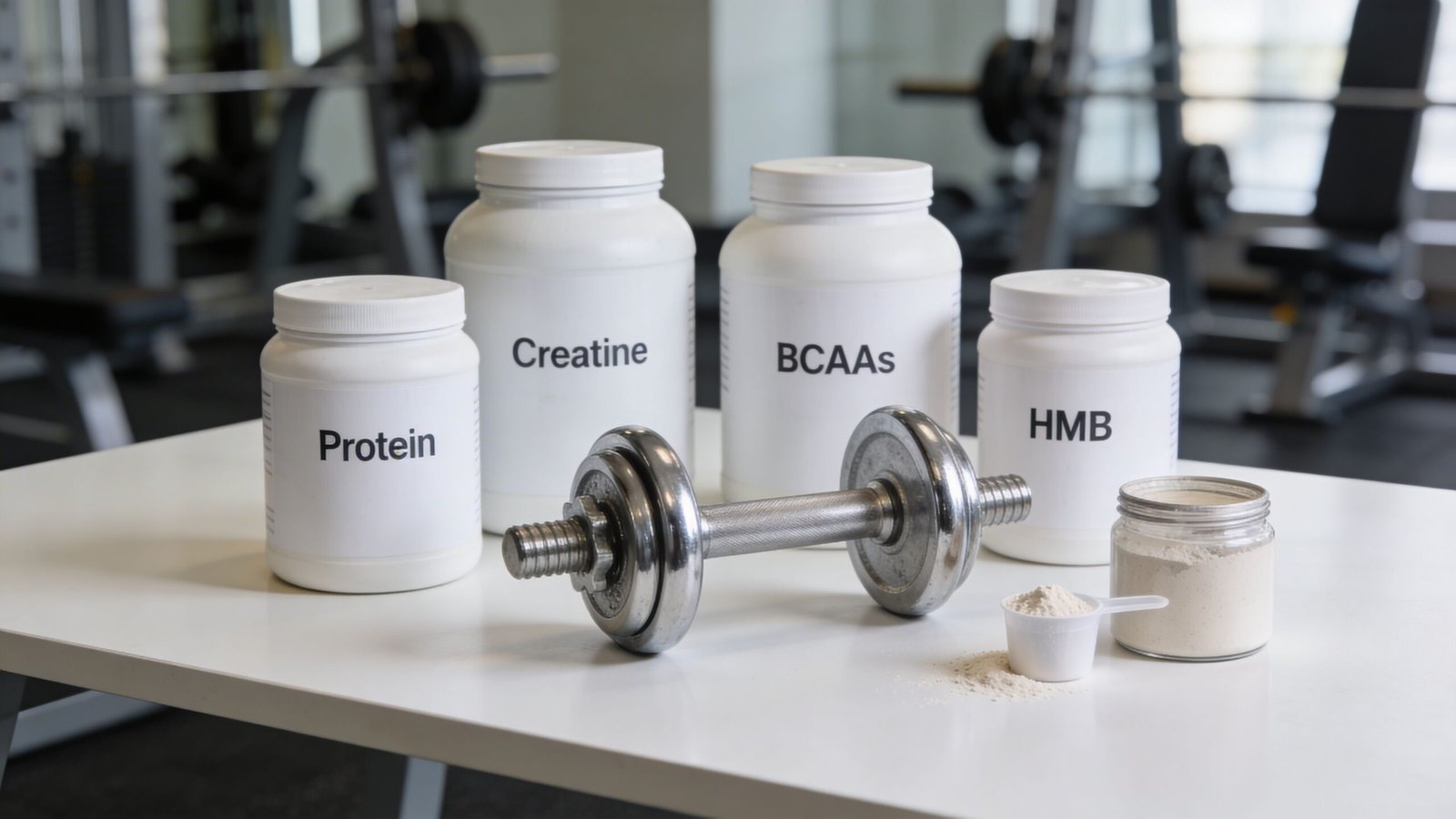
You’re training hard, eating better than you used to, and still not seeing the scale, mirror, or barbell move the way you expected. At this point, many individuals start looking at supplements.
Some of that instinct is smart. Much of it gets hijacked by marketing.
The best supplements for muscle growth are not magic powders that override weak programming, low protein intake, poor sleep, or inconsistent calories. They are tools. Good ones help you train harder, recover better, and fill real gaps. Bad ones drain your budget and add clutter to a routine that was already missing the basics.
As a practical coach, I look at supplements the same way I look at lifting accessories. If the foundation is solid, the right addition helps. If the foundation is sloppy, the extra layer does very little.
That matters even more on Amazon, where you can find excellent products and complete junk sitting side by side. A flashy label, a “hardcore” name, and a long ingredient list do not make a supplement effective. In many cases, the opposite is true.
This guide focuses on seven Amazon supplement products, but it is also built around something more useful than a simple roundup. Each pick represents a category. You’ll see why that category matters, when it makes sense to use it, and who should skip it. That way, you do not just buy a tub. You build a stack that fits your training, recovery, and budget.
Introduction Fueling Your Fitness Goals in 2026
A common pattern shows up after the beginner phase. The first few months go well, strength climbs fast, and muscle starts to show. Then progress slows. Workouts still happen, but the “newbie gains” feeling fades.
Individuals usually start asking the wrong question at that point. They ask, “What supplement will finally make me grow?” The better question is, “What is the next tool that supports the work I’m already doing?”
That difference matters.
A good muscle-growth supplement should do one of three things. It should help you hit your daily protein target, support better training output, or improve recovery enough to keep quality high across the week. If it does not clearly fit one of those jobs, it usually belongs in the “optional at best” pile.
What works in real life
Busy people do not need a lab-grade stack. They need products they will consistently use.
That usually means:
- Protein powder for convenience when meals fall short
- Creatine monohydrate for strength and training output
- A few situational add-ons if your training style justifies them
Everything else should earn its spot.
Buy supplements the same way you buy gym equipment. Start with the pieces you will use every week, not the shiny extras.
This review keeps that filter throughout. The goal is not to praise the most ingredients. The goal is to find the best supplements for muscle growth on Amazon that have a clear job, a sensible formula, and a practical place in your routine.
The 7 Best Muscle Growth Supplements at a Glance
If you want the short version first, these are the seven Amazon categories and product picks that make the most sense for muscle gain.

| Product | Category | Best for |
|---|---|---|
| Optimum Nutrition Gold Standard 100% Whey | Whey protein | Fast post-workout protein and daily protein support |
| Dymatize ISO100 | Whey isolate | Leaner formula and easier digestion |
| Optimum Nutrition Micronized Creatine Monohydrate | Creatine | Strength, power, and foundational muscle support |
| NOW Sports Beta-Alanine Powder | Beta-alanine | High-rep training and muscular endurance |
| Naked Casein | Casein protein | Evening protein and long gaps between meals |
| Nutricost L-Citrulline Powder | Citrulline | Better training feel and pump-focused sessions |
| Orgain Organic Plant Based Protein Powder | Vegan protein | Plant-based lifters who still need convenient protein |
Some of these are foundation products. Some are optional specialists.
The quick sorting rule
Use this lens before you buy:
- Need the biggest return? Start with whey or vegan protein plus creatine.
- Need help with long sessions or higher-rep work? Beta-alanine is the next add.
- Need a slower-digesting option? Casein makes sense.
- Want a pre-workout performance add-on without a kitchen-sink formula? Citrulline can fit.
Not every product here belongs in every stack. That is a feature, not a flaw.
The Muscle Growth Pyramid Understanding Priorities
A common mistake shows up before the first scoop ever hits the shaker bottle. Someone buys three supplements on Friday, then trains inconsistently, sleeps inadequately, and guesses at protein intake all week. The stack is not the problem. The order is.

Muscle growth is built in layers. Supplements help, but they work best after the lower levels are handled. That perspective matters in this guide because the seven picks are not seven versions of the same solution. Each category has a job, and some only make sense after the basics are covered.
Base layer training that forces adaptation
Muscle growth starts with progressive overload. Your body needs a reason to add muscle, and that reason is repeated training stress that gradually increases.
That increase can come from more load, more reps, more hard sets, better technique, or better control of rest periods. If training performance stays flat for months, the limiting factor is rarely a supplement.
Use a simple audit:
- Are your main lifts or key hypertrophy movements improving over time?
- Are your working sets close enough to failure to challenge the target muscle?
- Are you consistent enough with exercise selection to measure progress clearly?
If those answers are shaky, fix that first.
Middle layer food and recovery
The next layer is nutrition. Muscle is expensive tissue. If calories are too low or daily protein is inconsistent, growth slows down even with solid training.
Recovery sits right beside it. Sleep, hydration, stress, and rest days affect how well you perform in the next session and how much quality volume you can recover from. Busy lifters often underestimate this part because it is less exciting than a new tub on Amazon.
For anyone training hard four or five days per week, recovery support can matter more than adding another performance product. If that is your weak link, this guide to the best supplements for workout recovery can help you choose more intelligently.
Peak layer supplements that support the plan
Supplements belong at the top because they add to a working plan. They do not replace one.
Even within this top layer, there is a clear pecking order. Protein powders and creatine usually earn the first spots because they solve common problems directly. Protein helps people hit intake targets they miss with food alone. Creatine supports strength, training output, and lean mass over time. Categories like beta-alanine, casein, or citrulline are more situational. They can be useful, but only when the goal and training style match the tool.
That is the point of organizing this article by category instead of dumping products into a generic top-seven list. A good supplement stack is built around what you need more of. Protein coverage. Better strength support. A slower-digesting option. Extra help for high-rep work. Start there, then choose the product that fits that category well.
Here is a useful visual primer before you build your stack:
If your training, food, and sleep are disorganized, more supplements usually mean more expense, not more muscle.
The 7 Best Supplements for Muscle Growth A Full Review
You finish a workout, toss a tub into your Amazon cart, and assume you handled nutrition. Sometimes that works. More often, it leads to a shelf full of products solving problems you do not have.
The better approach is to buy by category. Each supplement below has a different job. One helps you hit protein intake. One supports strength and training output. Others make sense only when your schedule, digestion, or training style gives them a clear role.
Optimum Nutrition Gold Standard 100% Whey
For a lot of lifters, whey is still the smartest first purchase.
Optimum Nutrition Gold Standard 100% Whey stays popular for simple reasons. It mixes easily, tastes decent in most flavors, and fits into real schedules. If breakfast is rushed, lunch is light, or post-workout food is delayed, a scoop fills a gap fast.
Why this category matters
Protein powder supports muscle gain by helping you hit daily protein targets more consistently. That is the whole job.
That sounds basic, but basic works. A plain whey you use every week beats a fancier product that sits in the cabinet because it tastes bad or takes too much effort.
Pros
- Convenient daily protein: Useful on workdays, travel days, or any day food intake falls short.
- Good mixability: Usually blends well in water, milk, or oats.
- Versatile use: Works after training, between meals, or as part of breakfast.
- Easy to reorder: Widely available on Amazon in many flavors.
Cons
- Not ideal for lactose-sensitive users: Some people do better with isolate or a non-dairy option.
- Flavor matters more than labels: If you dislike the taste, compliance drops.
- Only useful when intake is low: It does not add anything special if your diet already covers protein well.
Summary
Best for lifters who need a practical first supplement and want the easiest way to cover protein gaps.
Dymatize ISO100
Some athletes do not need more protein options. They need one that feels easier to drink.
Dymatize ISO100 fits that role well. It is a whey isolate that usually digests lighter than standard blends, which matters for people who get bloated from thicker shakes or hate the heavy feeling after training.
Where isolate fits better than regular whey
Isolate usually costs more. In return, you often get a lighter texture, fewer digestion complaints, and a shake that works better during a cut or after hard sessions when appetite is low.
That trade-off makes sense for some buyers and not for others. If standard whey already works for you, there is no need to pay extra just for the word "isolate."
Pros
- Light texture: Easier to get down after hard training.
- Often easier to digest: Better fit for some users sensitive to regular whey blends.
- Useful during calorie cuts: Adds protein without making the shake feel heavy.
- Reliable for everyday use: Simple option for lifters who want consistency.
Cons
- Costs more than standard whey: The refinement shows up in the price.
- Less filling: Good for speed, less helpful if you want a meal-like shake.
- Still just protein: It does not create a separate muscle-building effect.
Summary
Best for lifters willing to pay more for easier digestion and a cleaner, lighter shake.
Optimum Nutrition Micronized Creatine Monohydrate
Creatine is the category I recommend most often after protein. It has a clear purpose, a long track record, and very little nonsense attached to it when you buy plain monohydrate.
Optimum Nutrition Micronized Creatine Monohydrate gets the main thing right. It sticks to creatine monohydrate without adding filler ingredients or flashy claims. That matters because this category works best when it stays boring.
Earlier in the article, I covered the evidence and standard dosing in more detail. The practical takeaway is simple. Take it daily, give it time, and judge it by better training output over weeks, not by whether you "feel" it on day one. If you want the nuts-and-bolts plan, read this guide on how to use creatine for muscle growth.
Pros
- Strong evidence base: Good fit for strength, power, and muscle-focused training.
- Simple formula: Easier to trust than multi-ingredient blends.
- Micronized texture: Usually mixes better than rougher creatine powders.
- Easy habit to keep: Works well in water, coffee, or a shake.
Cons
- Needs daily consistency: Random use weakens the benefit.
- No dramatic immediate effect: Results build over time.
- Unflavored powders are not exciting: Some people dislike the texture in plain water.
Summary
Best for nearly any serious lifter who wants one proven performance supplement in the stack.
NOW Sports Beta-Alanine Powder
Beta-alanine has a narrower use case than creatine, which is exactly why many lifters misbuy it.
It fits best when workouts include repeated hard efforts, short rest periods, and the kind of high-rep fatigue that makes muscles burn before the target tissue is fully trained. That can include hypertrophy blocks, circuits, conditioning intervals, sled work, and some home gym sessions where rest periods stay short.
Who should care about this category
If your training is mostly heavy triples and long rest periods, beta-alanine is not a priority purchase. If your sessions live in the 8 to 20 rep range and fatigue limits performance, it becomes more relevant.
I also like this category for women and older trainees who train with repeated efforts and want another useful option after protein and creatine are covered. It is a specialist tool, not a universal one.
Pros
- Useful for high-rep fatigue: Better fit for sessions where local muscular endurance matters.
- Single-ingredient formula: Easy to evaluate and stack.
- Good match for specific trainees: Particularly relevant when training style includes repeated hard efforts.
- Pairs well with basics: Easy to combine with protein and creatine.
Cons
- Lower priority for pure strength work: Not every lifter will notice much from it.
- Tingling sensation: The paresthesia bothers some users.
- Needs regular intake: It is not a one-scoop fix before a workout.
Summary
Best for trainees doing repeated hard efforts who want a targeted add-on once the foundation is already in place.
Naked Casein
Casein earns its spot by solving a different problem than whey.
Whey is usually the better all-purpose pick. Casein works better when you want a slower, more filling protein option later in the day, before bed, or during long gaps between meals. Naked Casein keeps that role straightforward with a simple formula and no extra distractions.
When casein makes more sense than whey
Buy casein if your schedule creates long stretches without food or if evening hunger pushes you toward low-protein snacks. It also works well for lifters who prefer thicker shakes, pudding-style mixes, or oats with more staying power.
Casein is not superior to whey. It is better suited to these situations.
Pros
- More filling texture: Often better for appetite control than whey.
- Useful at night: Good option before bed or during long meal gaps.
- Clear category role: Helps round out a protein plan rather than replace it.
- Works well in thicker recipes: Great in oats, yogurt, or pudding-style mixes.
Cons
- Heavier feel: Some people do not want a thick shake.
- Less convenient right after training: Many lifters prefer something lighter then.
- More niche than whey: Usually not the first protein powder to buy.
Summary
Best for lifters who already have the basics covered and want a slower-digesting second protein.
Nutricost L-Citrulline Powder
Citrulline sits in the "helpful if you know why you are using it" category.
I like it for lifters who want pre-workout support without a giant stimulant blend. It tends to fit volume-heavy training best. Leg days, bodybuilding sessions, and pump-focused workouts are where people usually notice it most.
Why citrulline can earn a place
Citrulline is not in the same tier as protein or creatine for muscle gain. Keep that in perspective.
Its value is more indirect. Some athletes train better when blood flow, workout feel, and set quality improve. Others buy it, feel very little, and would have been better off saving the money. That is the trade-off.
Pros
- Good stimulant-free pre-workout option: Helpful if caffeine hurts sleep or appetite.
- Easy to customize: Simple to pair with creatine or electrolytes.
- Can improve training feel: Most useful in volume-focused sessions.
- Usually transparent formula: Easier to assess than proprietary blends.
Cons
- Not a first-tier purchase: Protein and creatine come first.
- Effect varies by workout: Some sessions highlight it more than others.
- Easy to overhype: A better pump does not guarantee more muscle.
Summary
Best for intermediate and advanced lifters who already have the basics covered and want a cleaner pre-workout add-on.
Orgain Organic Plant Based Protein Powder
A muscle-building stack still needs a protein category for lifters who do not use dairy.
Orgain Organic Plant Based Protein Powder is a practical Amazon option for vegan, dairy-free, or whey-intolerant trainees who need something easy to use consistently. That consistency matters more than whether a plant powder tastes exactly like whey. It will not.
Role of plant protein
Plant protein has the same mission as whey. It helps close the gap between what you ate and what you needed.
The main trade-offs are usually texture, flavor, and sometimes mixability. If a plant-based powder tastes good enough to use daily and gives you a dependable protein option on busy days, it is doing its job.
Pros
- Useful for plant-based diets: Clear fit for vegan and dairy-free lifters.
- Easy protein backup: Helps cover intake gaps when meals fall short.
- Works well in a basic stack: Pairs naturally with creatine.
- Easy to find on Amazon: Convenient for repeat orders.
Cons
- Often grittier than whey: Common plant-protein trade-off.
- Flavor can vary a lot: Finding the right one may take trial and error.
- Usually heavier than isolate: Texture can be thicker or earthier.
Summary
Best for lifters who need a dairy-free protein source and want a dependable way to support muscle gain without overcomplicating the stack.
The Verdict The Ultimate Muscle Growth Stack for 2026
The smartest muscle-growth stack for 2026 starts with category priorities, not flashy labels.
For busy lifters, that usually means protein powder plus creatine monohydrate first. Those two categories solve the problems that derail progress most often. Protein helps cover intake gaps on days when meals are not enough. Creatine supports better training output over time, which gives your program more room to work.

Why this stack wins
This pairing is practical, affordable, and hard to beat.
Protein powder stays in the stack because perfect eating habits are rare. Early meetings, long commutes, low appetite after training, and inconsistent meal prep all make daily protein intake harder than it looks on paper. A good powder does not replace real food. It gives you a reliable backup when real life gets in the way.
Creatine monohydrate stays in the stack because it has the best mix of evidence, cost, and usefulness. It is still the form I recommend most often because it works, it is simple to dose, and it does not need a complicated formula around it to be effective. If someone asks me where to spend supplement money first after protein, creatine is usually the clear answer.
The rest of the stack depends on training style. A pre-workout can help if you train early or need a performance bump. Beta-alanine makes more sense for higher-volume work than for casual lifting. BCAAs are a niche add-on, not a foundation. Plant protein earns its place when dairy is not an option.
That is the verdict. Build your Amazon stack by category. Start with protein and creatine, then add products only if they solve a specific problem in your training or nutrition.
How to Buy Quality Supplements on Amazon
Amazon gives you convenience. It also gives you too many choices.
That means the skill that matters most is not finding more products. It is filtering out weak formulas fast.
Read the label before the reviews
Start with the supplement facts panel, not the star rating.
Look for these green flags:
- Single-ingredient clarity: Creatine should say creatine monohydrate. Beta-alanine should say beta-alanine. Fewer moving parts make evaluation easier.
- No proprietary blends: If the label hides ingredient amounts, skip it.
- Straightforward purpose: The product should solve one problem clearly.
Then use reviews to check the practical issues. Mixability, flavor consistency, packaging damage, and scoop size complaints are all worth scanning.
Buy categories before brands
A strong buying decision on Amazon starts with category fit.
For example, beta-alanine is useful for high-rep fatigue and has an especially interesting role for women and older athletes, based on the verified data cited earlier. But if you are a beginner who still misses protein targets, that category is still lower priority than a basic protein powder.
That same logic applies across the board.
A simple quality checklist
- Check third-party testing: NSF Certified for Sport or Informed-Sport are strong signs when available.
- Compare serving logic: Ask whether the serving matches the ingredient’s real job.
- Watch flavor inflation: Sometimes the “best-selling” flavor has very different review quality than the rest.
- Calculate practical value: Do not focus only on tub price. Think about how often you will use it and whether it will replace a more expensive habit.
The best supplement on Amazon is the one that fits your goal, lists what it contains clearly, and gets used consistently.
Match the product to your level
A beginner usually needs only two questions answered. “Can this help me hit protein?” and “Does this belong in a simple creatine routine?”
If you are still sorting that out, this guide on the best protein powder for beginners can help narrow the decision.
Intermediate and advanced lifters can be more selective. They may add casein for appetite control, beta-alanine for repeated efforts, or citrulline for training quality. But the buying standard stays the same. Clear label, clear purpose, clear fit.
Conclusion Your Next Steps to Building Muscle
The best supplements for muscle growth do not replace disciplined training, high-quality food, or sleep. They support those things.
If you want the shortest path to a smarter stack, start with protein powder and creatine monohydrate. That pairing solves the two problems many lifters experience. Inconsistent protein intake and not getting enough support for hard, repeated training.
After that, be selective. Add beta-alanine, casein, citrulline, or a vegan protein option only when they fit your routine and solve a real problem.
That is how good supplement use works. Fewer products. Better reasons. More consistency.
Frequently Asked Questions About Muscle Growth Supplements
What is the best first supplement for muscle growth
Start with the category that fixes your biggest bottleneck.
If you regularly miss your protein target, use protein powder first. If protein intake is already solid, creatine monohydrate is usually the better first add-on for strength, training volume, and lean mass support. That category-first approach keeps your stack practical instead of turning it into a random Amazon cart.
Do I need all seven supplements on this list
No.
These seven categories are better viewed as tools, not a checklist. A busy lifter who trains three or four days per week may do very well with just whey and creatine. Someone training early in the morning with long sessions might also benefit from citrulline. A plant-based lifter may need a stronger protein solution from the start. The right stack depends on what problem you are trying to solve.
Is creatine safe for long-term use
For healthy adults, creatine monohydrate has one of the better safety profiles in sports nutrition.
The long-term concern usually comes from internet rumors, not from the evidence reviewed in the main section. As noted earlier, creatine is widely studied, and the common hair-loss claim is not well supported in the way supplement marketing and social media often suggest. The bigger practical issue is choosing a plain, properly dosed creatine product and taking it consistently.
Should I take supplements before or after workouts
Timing matters less than consistency for several categories.
Protein works best wherever it helps you hit your daily intake. Creatine should be taken every day, with timing being a minor detail for many individuals. Beta-alanine also works through regular intake over time, not from one perfectly timed scoop. Citrulline is the category where pre-workout timing makes the most sense, because it is commonly used to support training performance during the session itself.
Are BCAAs one of the best supplements for muscle growth
Usually not.
If you already get enough total protein from food and a quality protein powder, BCAAs are often a low-return purchase. I rarely recommend them as a first or second buy for muscle gain because the same budget usually goes further with a complete protein source or creatine.
How do I know if an Amazon supplement is low quality
Start by reading the label like a coach, not like a shopper chasing hype.
Three red flags show up again and again:
- Proprietary blends: the label hides the actual dose of each ingredient.
- Overstuffed formulas: too many ingredients usually means underdosed ingredients.
- Hype-heavy listings: if the page promises extreme results but avoids clear serving amounts, third-party testing, or plain ingredient names, move on.
If you want more practical, no-hype advice on supplements, training, recovery, and beginner-friendly fitness routines, visit Energy Supplement Reviews. It’s a solid resource for building a routine that fits real life, whether you train at home or in the gym.
