


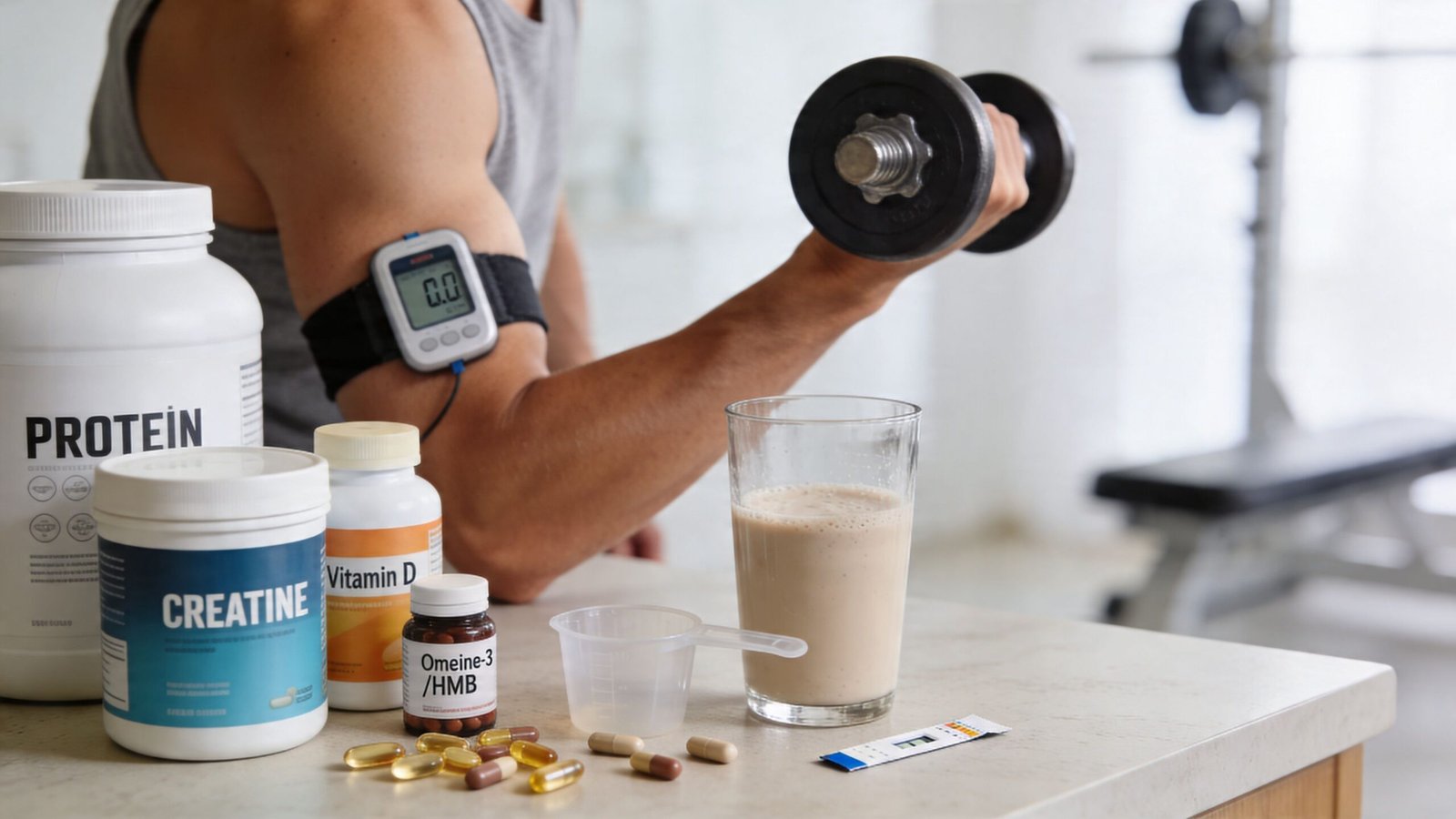
When you're managing diabetes and want to build muscle, the best supplements are the ones that work with your body, not against it. You need things that support muscle growth without sending your blood sugar on a rollercoaster. We're talking about high-quality whey protein isolate, casein protein, creatine monohydrate, and vitamin D—all of which have solid evidence showing they are safe and effective when used correctly.
Building Muscle with Diabetes The Smart and Safe Way
If you're living with diabetes, building muscle isn't just an aesthetic goal—it's one of the most powerful moves you can make for your long-term health. The main challenge, of course, is fueling that new muscle growth without causing unpredictable blood sugar spikes or dangerous lows. Let's walk through a clear, safe, and effective playbook for doing just that.

Think of your muscles as hungry "sponges" for glucose. The more muscle you build, the more efficiently your body can pull sugar from your bloodstream to be used as energy. This makes strength training a cornerstone of modern diabetes care because it directly improves your glycemic control.
The Foundation of Muscle Growth and Glucose Control
It all comes down to a smart combination of nutrition, focused training, and evidence-backed supplements. For anyone with diabetes looking to get stronger, hitting your protein target is non-negotiable. Most experts recommend aiming for 1.2 to 2.0 grams of protein per kilogram of body weight each day.
Spreading this intake across several meals helps fuel muscle repair without overwhelming your system with a single large glucose load. This is why the American Diabetes Association now recommends at least two to three strength sessions a week; resistance training is often even better than cardio for blood sugar regulation. In fact, our skeletal muscles use over 80% of insulin-driven glucose, so more muscle literally means better insulin sensitivity. You can learn more about how to build muscle with diabetes on SkinGrip.com.
The core principle is this: Muscle tissue acts as a glucose disposal site. By increasing your muscle mass through resistance training, you create more storage space for blood sugar, effectively helping your body manage glucose levels with greater ease.
Why a Smart Supplement Strategy Is Key
Let's be clear: supplements aren't magic. They are simply tools to amplify the results you get from your dedication in the gym and kitchen. When chosen correctly, they can help fill nutritional gaps, boost your workout performance, and speed up recovery.
This guide will zero in on the best diet supplements for people with diabetes trying to build muscle, like specific protein powders and creatine. We’ll break down the science behind each one and show you how to use them safely. The goal is to empower you to make smart, informed choices that align with your health and fitness goals.
The Unbreakable Foundation: Nutrition and Training Before Supplements
Before we even talk about supplements for building muscle with diabetes, let's get one thing straight: you have to lay the groundwork first. Supplements are like the finishing coat of paint on a house—they can make things look a lot better, but they can't fix a crumbling foundation.
For anyone managing diabetes, that foundation of solid nutrition and smart training isn't just a good idea; it's non-negotiable. These are the two pillars that actually tell your body to build muscle. Without them, supplements are just noise.
Mastering Your Macros for Blood Sugar Stability
The first pillar is your nutrition, and it all comes down to how you balance your macronutrients: protein, carbohydrates, and fats. Each one has a specific job in building muscle, but for you, they also have to work together to keep your blood glucose levels steady.
Your plate should be a strategic mix of foods that fuel muscle repair without sending your blood sugar on a rollercoaster. That means focusing on:
- Lean Protein: This is the raw material for muscle. Think chicken breast, fish, tofu, and legumes.
- Complex Carbohydrates: These break down slowly, giving you sustained energy instead of a sharp spike. Oats, quinoa, brown rice, and sweet potatoes are your go-to options.
- Healthy Fats: Crucial for hormone function and overall health. You'll find them in avocados, nuts, seeds, and olive oil.
It’s not just about eating carbs, but which carbs you choose. A study in the British Medical Journal drove this point home, showing that people who ate more non-starchy vegetables and fruits managed their weight better than those who relied on refined grains. It confirms what many of us know from experience: whole, high-fiber foods are king for metabolic health.
Think of your nutrition as a dam controlling your blood sugar, which is the river. Whole foods packed with protein, fiber, and healthy fats are like solid, well-placed stones, creating a steady, predictable flow. Processed foods and simple sugars are like loose sand, causing unpredictable floods and crashes.
How Strength Training Becomes a “Glucose Sink”
Your second pillar is consistent strength training, and it’s a game-changer for people with diabetes. When you lift weights, your muscles scream for energy. To get it, they start pulling glucose directly out of your bloodstream, acting like a “glucose sink.”
This has two incredible benefits. First, it helps lower your blood sugar right away, both during and after your workout. Second, and maybe more importantly, it makes your body much more sensitive to insulin over time. Your muscles get so much better at using glucose that your body doesn't have to work as hard—or use as much insulin—to get the job done. This improved insulin sensitivity is a massive win.
A smart training plan focuses on compound exercises like squats, deadlifts, and presses because they hit multiple muscle groups at once. This creates the biggest demand for energy, giving you the strongest signal for muscle growth and blood sugar control. Timing your meals around these workouts can make an even bigger difference. You can dive deeper into that strategy in our guide on what to eat after strength training.
At the end of the day, supplements can only magnify the results you earn in the kitchen and the gym. They’re the final 10%, not the first 90%. By building this unbreakable foundation first, you're giving any supplement you add a solid platform to work from, helping you build muscle safely and for the long haul.
Finding the Right Protein Powder for Blood Sugar Control
Protein powder is a fantastic tool for hitting your muscle-building goals, but when you're managing diabetes, the stakes are higher. The wrong choice can send your blood sugar on an unexpected roller coaster. It's not just about protein content; it's about how your body processes it.
So, let's take a look at the most common protein types on the market: whey isolate, concentrate, casein, and the ever-popular plant-based options. Understanding the subtle differences in how they're digested and what they contain is the key to choosing a supplement that helps, not hinders, your progress.
Whey Protein Isolate
Summary: If there’s a gold standard for post-workout protein, especially for someone keeping a close eye on blood sugar, it's whey isolate. Think of it as whey protein in its purest form. It goes through an extra filtration process that strips out nearly all the lactose (milk sugar) and fat. What you're left with is a product that's often over 90% protein by weight, with almost no carbs to worry about. It digests incredibly fast, sending a rush of amino acids—including a heavy dose of leucine—straight to your muscles to kickstart the repair process.
Pros:
- Virtually no impact on blood sugar thanks to its ultra-low carb and sugar content.
- It works fast. The rapid digestion makes it perfect for that post-workout window when your muscles are screaming for fuel.
- High in leucine, the most powerful amino acid for triggering muscle growth.
Cons:
- It costs more. That extra filtering step comes with a higher price tag.
- The texture can be thin. Some people find the low-fat content makes for a watery shake.
Whey Concentrate and Casein
Summary: Whey concentrate is isolate's less-processed cousin. It’s still an excellent source of protein, but it holds onto a little more of the original fat and lactose. That means the carb count can creep up to 3-5 grams per serving. While that's usually manageable, it makes reading the nutrition label absolutely non-negotiable. Then there’s casein, which is a completely different animal. It’s the slow-and-steady protein. When you drink it, it forms a gel in your stomach, leading to a slow, sustained release of amino acids over several hours.
Think of whey isolate as quick-burning kindling for your metabolic fire, providing immediate fuel for muscle repair. Casein is more like a slow-burning log, offering a sustained release of protein that's perfect for overnight recovery or between meals to prevent muscle breakdown.
Pros (Casein):
- Keeps your muscles fed for hours, which is great for preventing muscle breakdown.
- Helps you feel full, a nice bonus if you're also managing your overall calorie intake.
Cons (Casein):
- It’s not for a quick fix. You won't get that immediate post-workout amino acid spike.
- Check the label. Just like concentrate, some brands can have more carbs or fat.

This just goes to show that supplements are there to amplify your results, not create them. A solid diet and consistent training are the real foundation.
Plant-Based Protein Blends
Summary: The world of plant-based protein has improved dramatically, and these powders can be a fantastic, fiber-rich choice for anyone with diabetes. The most common sources you'll see are pea, soy, and hemp. Soy is one of the few plant proteins that's "complete," meaning it has all nine essential amino acids your body can't make on its own. Pea protein is another powerhouse, especially rich in that all-important leucine. Today, the best products typically combine multiple sources to create a robust, complete amino acid profile. A huge benefit here is the naturally occurring fiber, which helps slow down digestion and promote more stable blood sugar levels. If you want to dive deeper, our guide on how to choose protein powder has even more detail.
Pros:
- They're often high in fiber, which is your best friend for blood glucose control.
- Perfect for anyone with a dairy allergy or sensitivity.
- Packed with other nutrients that you won't find in dairy-based proteins.
Cons:
- Hidden sugars. Some brands add a lot of sweeteners to improve the taste, so always read the ingredient list.
- Incomplete proteins. Stick with blends from reputable brands to ensure you’re not missing any key amino acids.
Creatine Monohydrate: A Powerful and Safe Ally for Building Muscle
First things first, let's get one common misconception out of the way: creatine is not a steroid. Far from it. In fact, creatine monohydrate is one of the most extensively studied and consistently effective supplements you can find for building strength and muscle, even when you're managing diabetes.

Creatine Monohydrate Review
Summary: Creatine works by boosting your muscles' primary energy source. It helps your body rapidly regenerate adenosine triphosphate (ATP), which is the high-octane fuel your muscles burn during short, intense efforts like lifting weights. With more of this fuel on hand, you can often squeeze out an extra rep or two, or add a little more weight to the bar. Over time, that extra work is precisely what signals your body to build new muscle. For people with healthy kidneys, the mountain of research is clear: standard doses of creatine are safe. A major 2022 review published in PMC concluded that a typical dose of 5 grams of creatine daily did not negatively impact metabolic control or interfere with the benefits of exercise for individuals with Type 2 Diabetes (as long as they didn't have pre-existing kidney disease). You can read the complete 2022 review on PMC to see the data for yourself.
Crucial Takeaway: Before starting creatine or any new supplement, it is absolutely essential to speak with your doctor or endocrinologist. This is non-negotiable, especially if you have any history of kidney issues or take medications that affect kidney function.
Pros:
- Proven Strength and Power Gains: It's not uncommon to see strength gains in the 5-15% range. This allows you to train harder, providing a stronger stimulus for growth.
- Supports Muscle Growth: By helping you lift more and pulling water into your muscle cells (a process called cell volumization), it creates an excellent environment for building muscle.
- No Impact on Blood Sugar: At recommended doses, it has been shown to be safe for glycemic control in people with healthy kidney function.
- Incredibly Cost-Effective: You'd be hard-pressed to find another supplement with this much research backing it that is also this affordable.
Cons:
- Initial Water Retention: Some people notice they hold a little extra water when they first start. This is mostly stored in the muscle, is generally harmless, and often evens out over time.
- Consistency Is Key: Creatine works by building up in your muscles. You have to take it daily to keep those levels topped off; it’s not a pre-workout you take for an immediate jolt.
There's no need to overcomplicate it. A simple daily maintenance dose is all you need. To learn more about the best way to get started, our guide on how to take creatine effectively is a great resource. Just 3-5 grams of creatine monohydrate mixed with water each day is the proven strategy for saturating your muscles and reaping the benefits.
A Look at Other Helpful Supplements for Muscle Support
Once you’ve dialed in your protein and creatine, you might wonder what’s next. Think of those two as your foundation. Now, we can look at a few other well-researched supplements that can act as specialized tools to support your muscle-building goals.
These aren't magic pills, but they can give you a targeted edge, especially when living with diabetes. Let's break down what they do, why they might be helpful, and what to watch out for.
Leucine and HMB: The Muscle-Building Triggers
Summary: If protein is the collection of bricks for building muscle, leucine is the foreman telling the crew to get to work. It's an amino acid that directly signals your body to kickstart muscle protein synthesis. Then there’s HMB (beta-hydroxy beta-methylbutyrate). Your body makes a small amount of this when it processes leucine. HMB’s main job is anti-catabolic, meaning it helps prevent muscle breakdown. Think of it as a defensive player, protecting the muscle you've worked so hard to build.
Pros:
- Powerful Signal: Leucine is the gold standard for activating the body's primary muscle-building pathway, known as mTOR.
- Muscle Preservation: HMB is excellent at safeguarding existing muscle mass, which is critical for maintaining your metabolic engine.
- Blood Sugar Neutral: In typical doses, neither has a meaningful effect on blood glucose, making them a safe addition for most people with diabetes.
Cons:
- Cost and Necessity: If your diet is already packed with high-quality protein (1.6-2.2 grams per kilogram of body weight), the extra benefit you get from these might be small.
Vitamin D: More Than a Vitamin for Muscle and Metabolism
Summary: We often talk about Vitamin D for bone health, but its role in the body is far bigger—it acts more like a hormone. For anyone building muscle, especially someone with diabetes, it’s a crucial player. Research consistently links low Vitamin D levels with weaker muscles and poorer insulin sensitivity. Getting your levels right supports the very foundation of muscle contraction and can help your body use insulin more effectively.
Pros:
- Insulin Sensitivity: Having sufficient Vitamin D is strongly associated with better blood sugar management.
- Muscle Strength: It's vital for the calcium regulation within muscle cells that powers strong, forceful contractions during your lifts.
- A Widespread Issue: Supplementing can fix a very common nutritional shortfall that directly impacts your health and fitness goals.
Cons:
- Requires Medical Guidance: More is definitely not better. Since it’s a fat-soluble vitamin, it can accumulate in your body. Always get your levels tested by a doctor and supplement under their direction to avoid toxicity.
A Quick Word on Omega-3s: You've probably heard about the anti-inflammatory benefits of omega-3 fatty acids from sources like fish oil. For a body in training, this can mean less muscle soreness and better recovery. On top of that, omega-3s may improve how your cells respond to insulin. It's another worthwhile topic to bring up with your doctor.
Supplements to Be Wary Of
The supplement aisle is full of flashy promises, but not everything is safe or effective, particularly when you're managing diabetes. You have to be a skeptical and informed consumer.
Here are a couple of major red flags to watch for:
- Stimulant-Heavy Pre-Workouts: Many of these formulas are packed with massive doses of caffeine and other stimulants. This can spike your heart rate and cause wild, unpredictable swings in blood sugar. Worse, the jittery effects can sometimes mask the early warning signs of hypoglycemia, which is a serious risk.
- "Proprietary Blends": If you see this on a label, put the bottle down. Companies use this term to hide the exact amount of each ingredient in a mix. You have no idea if you're getting an effective dose of something good or a heap of something that could interfere with your medications or blood sugar—like hidden sugars or stimulants.
When in doubt, stick to supplements with simple, transparent labels. And most importantly, run any new supplement past your endocrinologist or a registered dietitian before you start taking it. Your health and safety always come first.
Your Action Plan for Using Supplements Safely
Alright, let's bring this all home. We've covered a lot of ground, and it's easy to feel a bit overwhelmed by all the information. But building muscle when you have diabetes is absolutely possible with a smart, safe plan. The key is turning knowledge into action.
Think of supplements as tools in your toolbox—they can be incredibly helpful, but they won't build the house for you. They’re there to support the real work: your nutrition and your training. Here’s a simple, three-step plan to help you get started safely and effectively.
Step 1: Talk to Your Healthcare Team
This is your first move, and it's non-negotiable. Before you even browse for a supplement online, your doctor and endocrinologist need to be in the loop. They're your most important partners in this.
Set up a specific appointment to talk about your fitness goals. When you go, be ready to discuss these points:
- Your Goals: Be direct. Tell them you want to build muscle and explain why it's important to you.
- Your Numbers: Discuss your recent A1c levels to give them a clear picture of your current glucose management.
- Kidney Health: This is a big one, especially if you're thinking about creatine. Ask for a look at your latest kidney function tests (like eGFR and ACR).
- Your Meds: Bring a complete list of every medication you take—for diabetes, blood pressure, anything. This is crucial for catching any potential interactions before they happen.
This conversation isn't just a formality; it's about creating a plan that's tailored and safe for you.
Step 2: Start Low and Go Slow
Once you get the green light from your doctor, it's time to introduce supplements—but cautiously. Everyone’s body is different, and what works for someone else might have a completely different effect on your blood sugar.
Your personal glucometer or continuous glucose monitor (CGM) is your best friend here. Think of it as your body's own dashboard, giving you real-time feedback on how you're responding to something new.
Follow this simple, systematic process:
- One at a Time: Never start two or three new supplements at once. If your blood sugar goes haywire, you won't know which one is the culprit.
- Start with a Small Dose: For the first few days, try half the recommended serving size. This gives your body a chance to adapt and lets you see how it reacts.
- Monitor Your Glucose: Check your blood sugar more often than you normally would, especially before and after workouts and meals.
- Keep a Log: Jot down the supplement, the dose, the time you took it, and your blood sugar readings. This log will be incredibly valuable when you talk with your doctor next.
Step 3: Prioritize Quality and Purity
The supplement industry can be a bit like the Wild West—it isn't regulated as strictly as prescription medicine. That means the quality, potency, and purity of products can be all over the map. This is where you have to be a smart shopper.
Always look for a seal from a third-party testing organization on the label. These certifications mean an independent lab has verified that what's in the bottle matches the label and that it's free of contaminants.
- Key Certifications to Look For:
- NSF Certified for Sport
- Informed-Sport
- USP Verified
Building muscle with diabetes is a marathon, not a sprint. The right supplements can give you a real edge, but they are just one piece of the puzzle. Your long-term health, guided by smart choices and professional medical advice, is always the grand prize.
Conclusion
Navigating the world of diet supplements while managing diabetes and striving to build muscle requires a smart, evidence-based approach. The journey starts not with a supplement, but with a solid foundation of consistent resistance training and a macro-balanced diet rich in protein, complex carbs, and healthy fats. Once this groundwork is laid, high-quality supplements like whey protein isolate, creatine monohydrate, and vitamin D can serve as powerful tools to amplify your results.
The key to success is prioritizing safety above all else. This means choosing products with minimal sugar, transparent labeling, and third-party testing. Most importantly, it means maintaining an open dialogue with your healthcare team to ensure every choice you make supports both your fitness goals and your overall health. By being a diligent, informed consumer, you can safely and effectively build a stronger, healthier body.
Frequently Asked Questions
Juggling supplements, diabetes management, and your muscle-building goals can feel like a lot. It's only natural to have questions. Let's clear up some of the most common ones so you can move forward with confidence.
Can I Replace My Diabetes Medication With These Supplements?
Let’s get the most critical question out of the way first: absolutely not. This is non-negotiable.
Think of supplements as nutritional support—they’re here to fill gaps, help you hit your protein targets, or give you a slight edge in performance. Your diabetes medications, on the other hand, are prescribed medical treatments that manage complex hormonal and metabolic processes. Supplements simply aren't built for that job. Always stick with your prescribed medication and talk to your doctor before adding anything new.
How Soon Will I See Results From These Supplements?
It's easy to get caught up in the hype, but patience is key here. Supplements are helpers, not miracle workers. The real drivers of muscle growth are your consistent hard work in the gym and your dedication to a solid nutrition plan.
You might feel the effects of something like creatine within a few weeks—maybe you can squeeze out an extra rep or two. But visible changes in muscle size take months of consistent effort. Your training and diet are the engine; supplements are just the premium fuel that helps it run a bit more efficiently. They can’t drive the car on their own.
What Should I Do if a Supplement Makes My Blood Sugar Go High?
If you notice a new supplement seems to be sending your blood sugar on an unexpected roller coaster, your first move is to stop taking it immediately.
Jot down everything you can: what you took, the dosage, the time, and what your glucose readings were before and after. This information is gold for your doctor. Get in touch with your healthcare provider or endocrinologist right away—they can help you figure out if the problem was the supplement itself, a hidden ingredient like sugar, or something else entirely. Don't even think about restarting it without their green light.
Are Plant-Based Proteins as Effective as Whey?
Yes, they absolutely can be. The key isn't whether the protein comes from a plant or an animal, but whether it has a complete amino acid profile.
Whey protein is naturally "complete," meaning it contains all nine essential amino acids your body needs to build muscle. Many individual plant proteins, like rice or pea on their own, are "incomplete." However, modern plant-based protein powders almost always use a strategic blend of different sources—like pea and rice—to create a complete amino acid profile that stands toe-to-toe with whey. They’re a fantastic, often fiber-rich, alternative.
At Energy Supplement Reviews, we provide the insights you need to train smarter and live healthier. For more evidence-based guides on supplements and nutrition, visit us at https://energysupplementreviews.com.
