


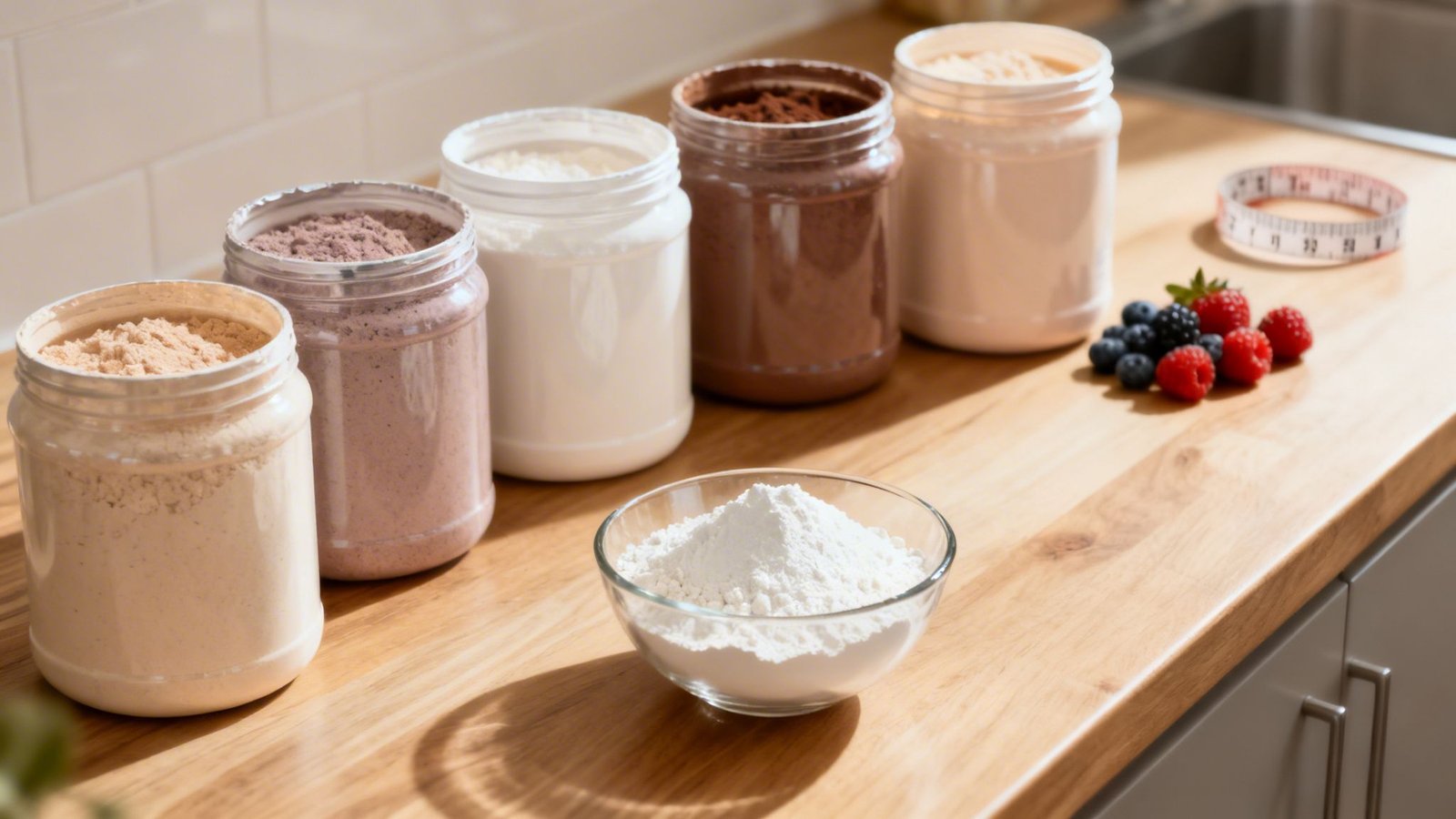
When you're just starting a fitness routine, walking down the supplement aisle feels like trying to read a foreign language. Row after row of giant tubs can be pretty intimidating. If you're looking for a simple, no-fuss starting point, the best protein powder for most beginners is a solid whey protein concentrate.
Why? Because it hits that sweet spot of being effective for muscle recovery, easy on the wallet, and generally simple to digest. It's a reliable first step for anyone looking to properly fuel their body after a workout.
Finding Your First Protein Powder

Kicking off a new workout plan is a huge win, but what you do after the gym is just as important. Think of protein powder as a convenient helper. When you exercise, you create tiny micro-tears in your muscles—that's what makes you sore. Protein provides the building blocks to repair those tears, which is exactly how you get stronger.
A protein shake isn't meant to replace real food. Instead, it’s a powerful tool to make sure you’re hitting your daily protein goals without having to cook another chicken breast.
This isn't some secret for elite athletes anymore. The global protein supplements market was valued at USD 7.7 billion in 2025 and is on track to hit USD 16.7 billion by 2035. That boom shows just how many people—especially beginners—are using protein to help them reach their goals.
Quick Guide to Beginner Protein Powders
To make sense of the main options, here’s a quick cheat sheet. This table breaks down the most common types of protein so you can see which one might be right for you before we get into the nitty-gritty details.
| Protein Type | Best For | Digestion Speed | Key Benefit for Beginners |
|---|---|---|---|
| Whey Concentrate | Post-workout recovery & overall use | Fast | Great balance of cost and effectiveness |
| Whey Isolate | Sensitive stomachs & low-carb diets | Very Fast | More protein per scoop, less lactose |
| Casein | Before bed or between meals | Very Slow | Provides a sustained release of protein |
| Plant-Based Blends | Vegans & those with dairy allergies | Varies (Moderate) | Dairy-free and allergen-friendly |
Seeing them side-by-side makes it a lot easier, right? Whey, which comes from milk, is considered the gold standard because it contains all the essential amino acids your muscles need to repair themselves. Casein is its slow-digesting cousin (also from milk), perfect for keeping your muscles fed over several hours, like overnight.
And don't sleep on plant-based powders! They've come a long way from the chalky tubs of the past. Modern blends mix sources like pea, rice, and hemp to create a complete amino acid profile that can absolutely hold its own against whey.
Of course, a shake is just one part of the equation. Knowing what to eat before a morning workout can make a massive difference in your performance and energy levels, too.
5 Best Protein Powders for Beginners: A 2026 Review

Walking down the supplement aisle can feel overwhelming, so we've put in the legwork to find the protein powders that are genuinely worth it for someone just starting out. Our top five picks were chosen for their ingredient quality, how well they mix, taste, and overall value.
Basically, you can't go wrong with any of these. We'll give you a quick summary of what makes each one stand out, an honest look at the good and the bad, and our final take to help you pick the right tub with confidence.
1. Optimum Nutrition Gold Standard 100% Whey Review
You’ve probably seen this black and red tub everywhere, and for good reason. Optimum Nutrition’s Gold Standard Whey is a blend of whey protein isolate, concentrate, and peptides. It's the go-to for countless people because it strikes a perfect balance between quality and price, making it an ideal first protein powder.
Summary: Think of Gold Standard Whey as the Toyota Camry of protein—it’s not flashy, but it’s incredibly reliable, does its job well, and has a track record you can trust. It delivers 24 grams of fast-digesting protein that’s perfect for post-workout recovery. You're getting years of consistent quality in every scoop.
Pros:
- Mixes Like a Dream: It dissolves almost instantly in a shaker with water or milk. No clumps, no grit. This is a huge win when you’re new to shakes and just want something that goes down smooth.
- Tons of Flavors: With dozens of options from Double Rich Chocolate to more adventurous ones, you’re bound to find a flavor you actually look forward to drinking.
- Great Ingredient Profile: The main ingredient is whey protein isolate, a purer form of whey with more protein and less of the stuff you don't want, like fat and lactose.
Cons:
- Uses Artificial Sweeteners: It’s sweetened with sucralose and acesulfame potassium, which is a dealbreaker for some people.
- Not for the Dairy-Intolerant: It's a milk-based protein, so if you have a serious dairy allergy or sensitivity, you’ll need to look elsewhere.
Conclusion: For any beginner who just wants a proven, great-tasting product without getting lost in the weeds, this is it. It’s the gold standard for a reason and sets a high bar. You can typically find a wide selection of Optimum Nutrition Gold Standard on Amazon.
2. Dymatize ISO 100 Hydrolyzed Protein Isolate Review
If you have a sensitive stomach or you’re tracking your macros with laser precision, Dymatize ISO 100 is a phenomenal choice. It’s made from hydrolyzed whey protein isolate, which means the protein has been "pre-digested" into smaller pieces. The result is lightning-fast absorption and incredibly easy digestion.
Summary: To stick with the car analogies, ISO 100 is the Formula 1 race car. It’s engineered for pure speed and performance. It’s virtually free of carbs, fat, and sugar while packing a powerful 25 grams of protein per serving. This makes it perfect for low-carb diets or for anyone who feels bloated after drinking other protein shakes.
A key benefit of hydrolyzed isolate is its rapid absorption. This means the amino acids can get to your muscles faster post-workout, potentially kick-starting the recovery process more efficiently than a standard concentrate.
Pros:
- Extremely Easy on the Stomach: The hydrolyzation process strips out almost all the lactose, making it one of the best choices out there if you're lactose intolerant.
- Incredibly Lean: With usually less than a gram of sugar and fat per serving, you get pure protein without any extra calories bogging you down.
- Super Fast-Acting: This is the shake you want right after a tough workout when refueling your muscles is the top priority.
Cons:
- It Costs More: The advanced filtering and hydrolyzing process means you'll pay a premium compared to a standard whey concentrate.
- Thinner Texture: Some people find it mixes into a more watery or thin consistency. If you love a thick, milkshake-like shake, this might feel a little different.
Conclusion: If you have a sensitive gut, are lactose intolerant, or simply want the purest and leanest protein you can get your hands on, Dymatize ISO 100 is absolutely worth the extra money. Find it in various flavors over on Amazon.
3. Orgain Organic Plant-Based Protein Powder Review
For those who are vegan or have a dairy allergy, Orgain's Organic Protein is one of the best plant-based options available. It cleverly combines pea, brown rice, and chia seed proteins to create a complete amino acid profile, giving your muscles all the building blocks they need to repair and grow.
Summary: Orgain really shows that you don't need dairy to make an effective—and tasty—protein powder. Each serving gives you 21 grams of protein and is USDA Organic, so you know it's free from GMOs, pesticides, and artificial junk. It’s a clean, green, muscle-building option.
Pros:
- Great for Allergies: It’s completely free of dairy, soy, and gluten, making it a safe bet for just about anyone with common dietary restrictions.
- Includes Healthy Fiber: The plant sources and added acacia provide a nice dose of dietary fiber. This not only helps with digestion but also keeps you feeling full longer.
- Surprisingly Creamy: Many old-school plant proteins were notoriously gritty. Orgain, on the other hand, has a smooth, creamy texture, especially if you use a blender.
Cons:
- Has That "Earthy" Taste: While the flavors are good, there’s a distinct underlying taste common to most plant proteins. If you're used to whey, it might take a shake or two to get accustomed to it.
- Slightly Less Protein: At 21 grams per serving, the protein content is a little lower than its top whey competitors.
Conclusion: This is our best protein powder for beginners who need a dairy-free or vegan-friendly choice but don't want to compromise on quality or taste. It's a clean and well-rounded product. You can check out Orgain Organic Protein on Amazon.
Alright, let's walk through the different kinds of protein powder you'll find on the shelf. Stepping into the supplement aisle for the first time can feel overwhelming, but it gets a lot simpler once you know what you're looking at.
Think of it like picking the right kind of fuel for your car. Some are built for speed and quick acceleration, while others are all about long-haul efficiency. Your job is to match the fuel to your body's engine and your specific goals.
You’ll notice pretty quickly that almost everything comes in a giant tub of powder. There's a good reason for that: powders make up a whopping 54.46% of the entire protein supplement market. As you can read in recent industry reports, they’re just far cheaper to make and ship than pre-mixed drinks. That’s great news for us, especially when you're just starting out and want to keep costs down.
Let's get into the main players you’ll meet.
Whey Protein: The Fast-Acting Standard
Whey is probably the most famous protein out there. It’s a byproduct of cheesemaking (think Little Miss Muffet's curds and whey) and is considered the gold standard for a reason. It packs all nine essential amino acids—the non-negotiable building blocks your body needs to repair muscle—and it gets to work fast.
This rapid absorption is why so many people chug a whey shake right after a workout. It’s like sending in the paramedics for your muscles, giving them exactly what they need to start the recovery process immediately.
You’ll usually see two main types of whey:
- Whey Concentrate: This is your classic, all-purpose whey. It’s the least processed, which means it keeps a little bit of the natural fat and lactose (milk sugar). For most people, the balance of high-quality protein and a wallet-friendly price makes it the perfect place to start.
- Whey Isolate: Think of this as a more refined version of concentrate. It goes through extra filtering to strip out most of the fat and lactose, leaving you with a higher percentage of pure protein. If you have a sensitive stomach when it comes to dairy or you're keeping a close eye on carbs, isolate is a fantastic upgrade.
So, if concentrate is your reliable, gets-the-job-done regular fuel, isolate is the premium stuff—a cleaner burn for more sensitive engines.
Casein Protein: The Slow-Release Fuel
Casein is whey’s often-overlooked sibling. It’s the other, more abundant protein in milk, making up about 80% of the total. But while whey is all about speed, casein is the master of slow and steady.
When you drink casein, it forms a gel in your stomach. This sounds a little weird, but it's an incredible feature. It causes the protein to break down and release amino acids very slowly over several hours.
This slow-drip feed of nutrients makes casein a brilliant tool for keeping hunger at bay and preventing muscle breakdown when you go a long time without eating, like overnight.
That's why you’ll often hear of people taking casein right before bed. It acts like an overnight maintenance crew, supplying your muscles with a steady stream of building blocks for repair while you sleep. You wake up feeling less sore and more recovered.
Plant-Based Protein: The Dairy-Free Powerhouse
If you’re vegan, have a dairy allergy, or are just trying to eat more plants, you're in luck. The world of plant-based protein has exploded in quality over the last few years. Gone are the days of gritty, swamp-tasting powders you had to choke down.
The secret to a great modern plant protein is the blend. Instead of relying on a single source, top-tier powders combine several different plants to create a complete amino acid profile that rivals whey. It’s all about teamwork.
Some of the most common ingredients you'll find in these blends are:
- Pea Protein: A real muscle-building MVP, loaded with branched-chain amino acids (BCAAs).
- Rice Protein: The perfect partner to pea, filling in the amino acid gaps to create a complete protein.
- Hemp Protein: A great addition that also brings healthy fats and fiber to the party.
- Soy Protein: A complete protein all on its own, though it's become less common in blends as some people have soy sensitivities.
These thoughtfully engineered blends mean you don't have to compromise on results if you're skipping dairy. They deliver the power you need, plain and simple.
How to Match a Protein Powder to Your Fitness Goals
So you know the difference between whey and casein. Great! But now for the important part: connecting those options to your why. The reason you're putting in the work at the gym in the first place.
Picking the right protein powder isn't just about finding a flavor you can stomach. It's about choosing the right tool for your specific job. After all, you wouldn't use a sledgehammer to hang a picture frame. The protein that’s perfect for building serious mass is very different from the one that will help you shed a few pounds.
Pairing Protein With Your Primary Goal
It’s no surprise the supplement aisle can feel overwhelming. With North America making up roughly 62.25% of the entire global market for protein supplements, there's a tub for just about every goal you can think of. The good news is we can cut through the noise by focusing on what you want to achieve.
Let’s break down the three most common goals and find the perfect protein strategy for each.
For Building Muscle: If getting stronger and adding size is your top priority, a fast-digesting whey protein is your best bet. A shake with whey isolate, in particular, taken within an hour or so after your workout, rushes amino acids straight to your tired muscles. This gives them the green light to start the repair and growth process.
For Managing Weight: When weight loss is the goal, the biggest battles are usually managing hunger and holding onto the muscle you have. This is where a slow-digesting casein protein becomes your secret weapon. It forms a gel in your stomach that keeps you feeling full for hours, making it perfect for curbing cravings between meals or before bed.
For General Health & Wellness: Maybe you're not trying to be a bodybuilder or hit a specific number on the scale. You just want to make sure your body is getting the protein it needs to stay healthy and recover from your daily activities. In that case, any high-quality protein—whey concentrate, isolate, or a solid plant-based blend—will do the trick beautifully.
How to Read a Nutrition Label Like a Pro
To make a smart choice, you have to learn to look past the flashy marketing on the front of the tub. The real story is always on the back, in the nutrition facts panel.
The most important number for any beginner is the protein-per-scoop ratio. A quality powder should give you at least 20-25 grams of protein per serving. If you see a huge scoop that only delivers 15 grams, you can bet it's loaded with cheap fillers.
Here’s a quick guide to what you should be looking for—and what you should run from.
What to Prioritize:
- High Protein: Look for that 20+ gram mark per serving.
- The First Ingredient: The protein source itself should be listed first (e.g., "Whey Protein Isolate," "Pea Protein"). This means it's the most prominent ingredient by weight.
- A Short Ingredient List: Fewer ingredients often means a cleaner, more straightforward product.
What to Avoid:
- Hidden Sugars: Be wary of words like sucrose, dextrose, corn syrup solids, or fructose high up in the ingredients.
- "Proprietary Blends": This is a red flag. It allows companies to hide the exact amounts of each ingredient, so you have no idea what you're actually paying for.
- Lots of Fillers: Ingredients like maltodextrin or various gums can add empty calories and sometimes cause bloating or digestive upset.
This decision tree gives you a simple starting point, helping you filter your options right away based on your dietary needs.

The first question is simple: dairy or no dairy? That alone will point you toward either whey and casein or the growing world of plant-based options.
Aligning your protein with your goal is a huge piece of the recovery puzzle. To learn more, check out our guide on what you should have as part of post-workout nutrition. By matching your powder to your mission and double-checking that label, you’re setting yourself up for success from the very first scoop.
Getting the Most Out of Your Protein Powder

Alright, so you’ve got your tub of protein powder sitting on the counter. What now? Just owning it is one thing, but knowing how to actually use it is where the magic happens. This isn't about following a set of complicated, rigid rules. It's about weaving it into your day-to-day life so it feels natural, not like a chore.
A lot of newcomers get tripped up by timing. There’s a persistent myth about a "30-minute anabolic window" after a workout, where you supposedly have to chug a shake or all your hard work is wasted. Let's clear that up: while your muscles are definitely ready to soak up nutrients after exercise, that window is much, much wider than 30 minutes. We're talking several hours.
So, take a breath. Having a shake post-workout is a great habit for recovery, but there’s no need to sprint from the squat rack to your shaker. What really moves the needle is your total daily protein intake. For different takes on timing, you can even explore expert advice on whether you should take protein during a workout.
Simple Dosing and Preparation Tips
When you’re just starting, keep it simple. A good baseline is one scoop per day. This will typically give you about 20-25 grams of protein, which is a perfect amount to supplement a diet rich in whole foods. Take it whenever it makes sense for you—after the gym, blended into a breakfast smoothie, or as a snack to fight off that 3 p.m. hunger.
Beginner's Rule of Thumb: Start with one scoop daily. Remember, the goal is to hit your overall protein target with a mix of real food and supplements, not to live off shakes alone.
Nothing will turn you off protein powder faster than a lumpy, gritty shake. Thankfully, it's an easy problem to solve.
- Liquid First, Powder Second: This is the golden rule. Pour your water, milk, or plant-based milk into the shaker before you add the scoop. This one simple step prevents that gross, sticky sludge from forming at the bottom.
- Dial in Your Liquid: The instructions on the tub are just a suggestion. For a thicker, more milkshake-like texture, use a little less liquid. If you prefer it thinner and easier to drink, just add more.
- Get a Good Shaker Bottle: Seriously, don't skip this. A decent shaker with a wire whisk ball or a built-in mixer is a small investment that pays off big. It's the difference between a clumpy mess and a perfectly smooth shake.
Creative Ways to Use Your Protein Powder
Let’s be real, drinking the same shake every single day gets old fast. The great thing about protein powder is its versatility. Start thinking of it less as a drink mix and more like a high-protein flour you can add to all kinds of recipes.
Here are a few dead-simple ideas to get you started:
- Boost Your Morning Oats: Once your oatmeal is cooked, stir in a scoop of vanilla or unflavored protein. It instantly makes it creamier and adds a huge protein hit to fuel your morning.
- Build a Better Smoothie: This is a classic for good reason. Just toss a scoop of protein in the blender with a banana or some berries, a handful of spinach, and your favorite liquid for a complete, nutrient-dense meal.
- Make High-Protein Yogurt: This is my favorite trick. Mix a scoop of chocolate protein powder into a bowl of plain Greek yogurt. The texture is surprisingly like pudding and it crushes sweet cravings.
- Whip Up Protein Pancakes: Add a scoop right into your favorite pancake mix (or a from-scratch recipe). It's an awesome way to make a weekend breakfast work for your fitness goals, not against them.
Once you start thinking beyond the shaker bottle, you'll find that hitting your protein goals becomes a truly effortless—and delicious—part of your routine.
Conclusion
Walking into the supplement aisle for the first time can feel pretty overwhelming, but once you have a clear plan, it gets a lot easier. After reviewing all the types, goals, and top-rated Amazon products, what’s the actual verdict on the best protein powder for beginners?
When it comes down to it, for most people just starting their fitness journey, a quality whey protein concentrate is tough to beat. It hits the sweet spot between effectiveness, great taste, and affordability.
If you're looking for a can't-go-wrong option, our top pick is Optimum Nutrition Gold Standard 100% Whey. It's been a go-to for years for a reason: it's incredibly reliable, tastes good, and mixes without any annoying clumps. It simply lets you focus on your training without overthinking your supplements.
Just remember, protein powder is a support tool, not a silver bullet. The real change happens when you're consistent in the gym and smart in the kitchen. This just makes it way more convenient to hit your daily protein numbers.
Ultimately, the best thing you can do is simply start. Use what you've learned here to pick a powder that aligns with your goals and budget, and then trust the process. Stay consistent, give your body the fuel it needs, and you’ll be well on your way.
Frequently Asked Questions
Alright, we've gone through the A-to-Z of protein powders, but I know there are probably a few questions still bouncing around. Let's clear up some of the most common ones I hear all the time so you can get started without any hesitation.
Will protein powder make me bulky?
Let's tackle the big one right away, especially for all the women out there wondering. The answer is a clear and simple no. Getting "bulky" doesn't happen by accident.
Building that kind of significant muscle mass takes very specific, intense training (we're talking heavy, progressive weightlifting) and, crucially, eating a lot more calories than you burn, day in and day out. A protein shake is just the raw material your body uses to repair and strengthen your muscles after you've worked them.
Think of it as fuel for recovery, not an instant muscle-inflater. For most people, it simply helps you build a stronger, leaner, and more toned physique.
Can I use protein powder if I don't work out?
Absolutely. It's a common misconception that protein is only for post-workout recovery. Protein is one of the three essential macronutrients your body needs every single day, whether you hit the gym or the couch.
Your body relies on protein for everything from supporting your immune system to keeping your hair, skin, and nails healthy. If you find it tough to get enough protein from meals alone—maybe you have a hectic schedule or follow a plant-based diet—a shake can be a lifesaver. It’s an incredibly convenient way to fill in the gaps and make sure your body has what it needs for overall wellness.
Is it safe to take protein powder every day?
For most healthy people, yes, having a daily protein shake is completely safe. The key is to remember what it is: a food supplement. It's no different than having other protein-rich foods like chicken, eggs, or beans, just in a more convenient form.
Of course, that doesn't mean more is always better. Stick to the recommended serving sizes on the label, which is usually one or two scoops a day. The goal is to supplement a balanced diet, not replace it. If you have any pre-existing kidney or liver issues, it's always smart to have a chat with your doctor before adding any new supplement to your routine.
What is the difference between mass gainer and protein powder?
This is a really important distinction, and it's easy to get them mixed up since they're often sold right next to each other. They serve completely different purposes.
- Protein Powder: This is what we've been talking about. It's designed to give you a concentrated dose of protein with very few carbs or fats. The main goal is to support muscle repair and help you hit your daily protein goal without adding a ton of extra calories.
- Mass Gainer: Think of this as a calorie bomb in a tub. It's loaded with a huge amount of carbohydrates and fats in addition to protein. It's made specifically for "hardgainers"—people who need to consume a massive number of calories to gain weight and size but struggle to do it with food alone.
Unless you have the specific goal of gaining weight as quickly as possible, a standard protein powder is what you're looking for.
