


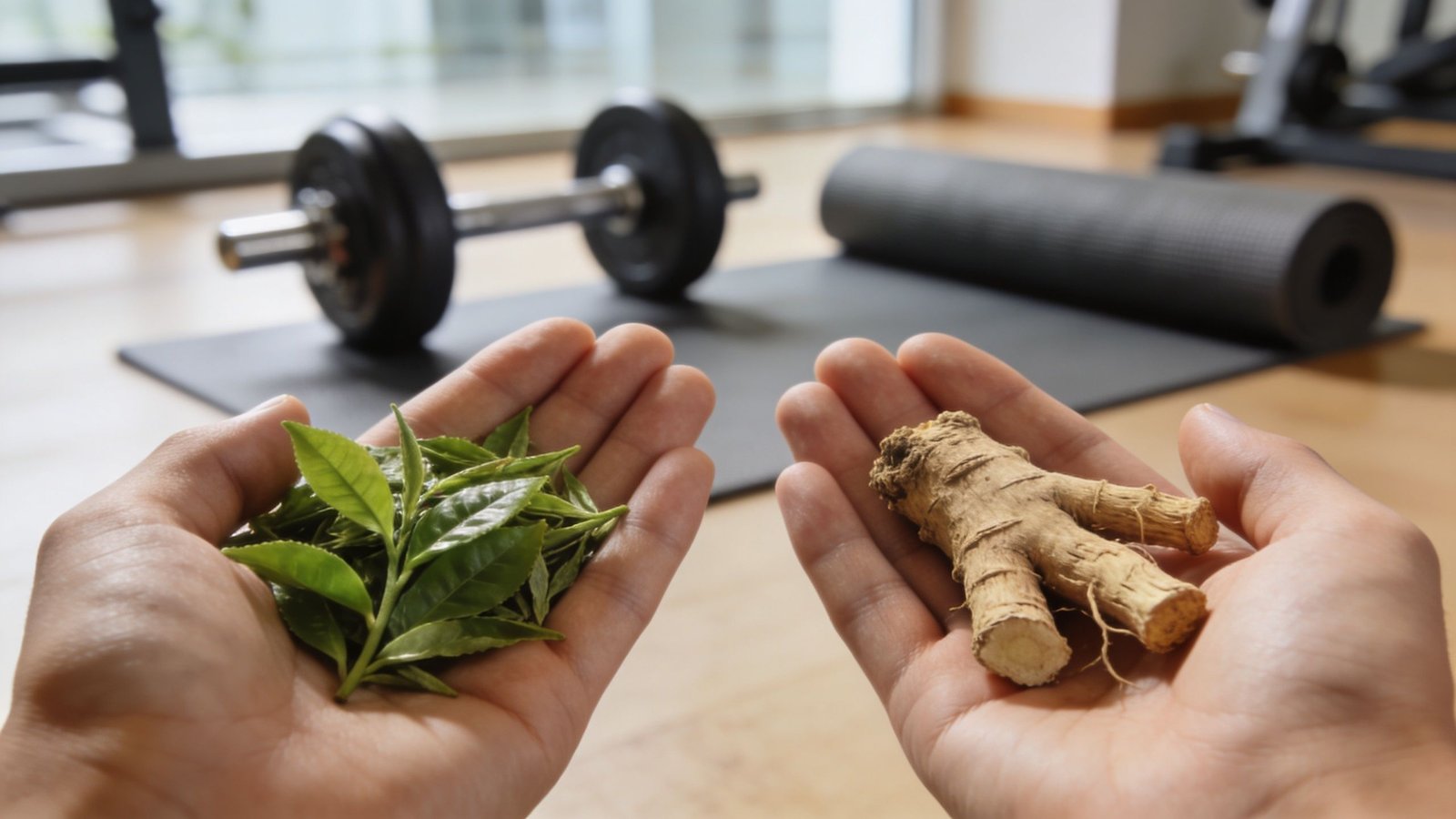
You’re standing under the bar, playlist on, chalk on your hands, and your body is ready. Your brain isn’t. One part of you wants aggression and laser focus. The other part is running through work stress, social anxiety, caffeine jitters, or that familiar pre-lift tension that makes a simple training session feel heavier than it should.
That’s where this choice matters. L-theanine and ashwagandha aren’t interchangeable. They solve different problems, on different timelines, and they fit different types of training. If you use the wrong one at the wrong time, you can end up underwhelmed, too relaxed, or still anxious when the session starts.
For acute moments, L-theanine has the edge for fast support. Clinical evidence shows measurable cognitive improvements within 30 to 60 minutes of consumption, and a 2019 study found lower stress scores after four weeks of supplementation. In acute performance settings, a single dose reduced reaction time, supported accurate memory recall, and improved test performance, as outlined in Momentous’ L-theanine vs ashwagandha overview. That’s why it keeps showing up in conversations around pre-workout focus.
Ashwagandha plays a different game. It’s not your emergency brake before a tense gym session. It’s the supplement you use when life stress is bleeding into recovery, sleep, motivation, and training consistency.
If you’re also comparing other options for gym anxiety and energy support, this guide on diet supplements for anxiety and low energy in the gym is worth reading alongside this one.
Introduction Calm Mind Stronger Lifts
Most lifters don’t need more hype. They need less internal noise.
The classic mistake is treating all “calming” supplements like they do the same thing. They don’t. L-theanine is usually the better fit when you need calm without losing sharpness. Ashwagandha is usually the better fit when your whole system has been running hot for weeks and your workouts are starting to reflect it.
Here’s the fast comparison before we get into product reviews.
| Feature | L-theanine | Ashwagandha |
|---|---|---|
| Best use | Acute anxiety and workout focus | Chronic stress and recovery support |
| Typical timing | Before training or stressful events | Daily, often later in the day |
| Onset | Fast | Gradual |
| Feel | Calm alertness | Deeper stress support, sometimes more relaxing |
| Best for | Pre-workout jitters, caffeine smoothing, technical focus | Burnout, overreaching, stress-heavy lifestyle |
Practical rule: If your problem shows up on the drive to the gym, L-theanine usually makes more sense. If your problem has been building for weeks, ashwagandha usually makes more sense.
L-Theanine vs Ashwagandha The Science of Calm and Focus
The best L-theanine or ashwagandha for anxiety and workout focus depends on one question. Do you need help right now, or do you need help rebuilding stress tolerance over time?
That single distinction clears up most of the confusion.

How L-theanine works
L-theanine works through neurotransmitter modulation. It increases GABA and dopamine levels while promoting alpha brain wave activity, and its onset occurs within 30 to 60 minutes, according to this discussion of L-theanine’s rapid bioavailability and workout use.
In plain terms, it tends to take the edge off without flattening you.
That’s why it fits training so well when the problem is overstimulation. A lot of lifters don’t need more intensity. They need cleaner intensity. If your pre-workout gives you tunnel vision, shaky hands, and a scattered mind, L-theanine often helps smooth that experience rather than replacing it.
How ashwagandha works
Ashwagandha functions as an adaptogen. It modulates the hypothalamic-pituitary-adrenal axis and the sympathoadrenal system, with documented ability to lower cortisol. It also needs 4 to 8 weeks of consistent daily use to achieve optimal stress tolerance and chronic anxiety reduction, with an evidence-supported dosage of 300 to 500 mg daily, and KSM-66 is the standardized extract referenced in clinical protocols, based on Moon Juice’s review of L-theanine and ashwagandha.
That profile makes ashwagandha less useful as a last-minute fix and more useful as a background support tool. It’s for the person whose nervous system never really seems to come down.
Onset matters more than most people think
A lot of supplement buyers miss this and end up saying a product “didn’t work” when the issue was timing.
If you take ashwagandha before a stressful squat session and expect a same-day shift, you’ll probably be disappointed. That’s not what it’s built for. If you take L-theanine hoping it will solve chronic overload from long workdays, poor recovery, and relentless stress on its own, you’ll also be disappointed.
For many gym-goers, the cleanest framework looks like this:
- Use L-theanine when the problem is situational. Pre-workout nerves, overstimulation, or a mentally noisy training session.
- Use ashwagandha when the problem is systemic. Persistent stress, poor recovery, and feeling stuck in fight-or-flight mode.
- Use both strategically if needed. One handles the moment. The other supports the baseline.
If you’re trying to dial in stimulant use too, this guide on caffeine vs L-theanine for ADHD focus and clean gym energy adds useful context.
The real trade-off
L-theanine is strong for calm alertness. Ashwagandha is stronger for deep stress support over time. That distinction matters because not all workouts ask for the same mental state.
A heavy deadlift day is not the same as a recovery circuit. A technical Olympic lifting session is not the same as low-intensity cardio. Treating “focus” like one generic feeling leads people to choose poorly.
You don’t want sedation when the session demands precision, speed, and confident execution.
Dosage and practical use
For L-theanine, the recommended dosage range is 100 to 200 mg per dose in the verified data. That makes it easy to use before training, especially for lifters who combine it with caffeine and want less jitter without losing alertness.
For ashwagandha, the verified range is 300 to 500 mg daily, with KSM-66 as the standardized extract tied to clinical protocols. It fits best when taken consistently, not randomly.
Here’s the short version.
| Decision point | Better choice |
|---|---|
| Need support before a workout | L-theanine |
| Want to smooth caffeine | L-theanine |
| Need long-term stress support | Ashwagandha |
| Dealing with chronic tension and recovery drag | Ashwagandha |
| Want both acute and long-view support | Consider stacking |
How to Choose For Your Specific Training Goals
The smartest way to choose isn’t by asking which supplement is “better.” It’s by asking which athlete are you right now.

The anxious lifter
This person feels fine until the gym is crowded, the music is loud, and the first working set is close. They don’t need to feel sleepy. They need to stop spiraling.
L-theanine is usually the better fit. It supports a calmer mental state without the sedating feel many lifters want to avoid before training.
The strength athlete
Heavy compound lifts demand commitment, timing, bracing, and confidence. The problem with “relaxation” supplements is that not all relaxation is performance-friendly.
The focus-versus-relaxation paradox matters here. Heavy compound lifts and technical movements may require sharper mental acuity and lower sedation, while metabolic conditioning or recovery sessions might benefit from relaxation. L-theanine doesn’t sedate and enhances alpha waves associated with calm focus, but no source directly compares these supplements’ effects on barbell performance, rep quality, or mind-muscle connection, as discussed in Seed’s guide on L-theanine vs ashwagandha.
That means the practical takeaway is simple. For heavy squats, deadlifts, bench, or skill-based lifting, L-theanine makes more sense than a more relaxing ashwagandha approach.
The overtrained professional
This is the person balancing training with work pressure, poor sleep habits, and a nervous system that never seems to switch off. Their workouts feel flat, not because they lack discipline, but because they’re carrying stress into every session.
Ashwagandha fits better here. It’s the longer-view tool for someone whose stress problem doesn’t begin at the gym door.
The mixed-goal trainee
A lot of readers fall into this camp. They lift hard, use caffeine, feel occasional anxiety before training, and also know they’ve been under too much stress for too long.
That’s where stacking can make sense. Use L-theanine for sessions where you need calm precision. Use ashwagandha as a daily support anchor.
Coach’s take: Match the supplement to the session. Sharp and technical favors L-theanine. Recovery-heavy or stress-heavy phases lean more toward ashwagandha.
If your main concern is pre-training clarity, these picks for pre-workout energy and focus can help you build a cleaner setup around that goal.
The 7 Best L-Theanine and Ashwagandha Supplements on Amazon in 2026
Amazon has no shortage of options, but most shoppers get stuck on labels instead of use case. Brand reputation matters. Form matters. Standardization matters. Most of all, fit matters.
A pure L-theanine capsule is different from a KSM-66 ashwagandha formula. A blend can be convenient, but it can also make timing harder if one ingredient is ideal pre-workout and the other is better later in the day.

Quick comparison table
| Product | Type | Best for | Notable formulation | Verdict |
|---|---|---|---|---|
| Doctor’s Best L-Theanine with Suntheanine | L-theanine | Pre-workout calm focus | Suntheanine form | Best overall for workout focus |
| NOW Foods L-Theanine | L-theanine | Simple daily use | Standalone L-theanine | Best budget-friendly L-theanine |
| Nature Made Calm & Relax | L-theanine blend | Everyday stress support | Theanine-focused calming formula | Best easy-entry option |
| Sports Research KSM-66 Ashwagandha | Ashwagandha | Daily stress support | KSM-66 extract | Best for long-term stress and recovery |
| Nutricost Ashwagandha | Ashwagandha | Straightforward value | Ashwagandha capsule formula | Best budget ashwagandha |
| Garden of Life Ashwagandha | Ashwagandha | Clean-label shoppers | Ashwagandha herbal support | Best clean-label pick |
| Double Wood L-Theanine Ashwagandha combo | Blend | Split-use buyers | Combination formula | Best hybrid option |
1. Doctor’s Best L-Theanine with Suntheanine
This is the product I’d put in front of the largest number of lifters. It’s simple, recognizable, and aimed directly at the use case where L-theanine shines most: acute anxiety and cleaner pre-workout focus.
Because the verified data supports 100 to 200 mg per dose for L-theanine and notes onset within 30 to 60 minutes, products in this category fit best when taken before lifting, high-pressure training, or stressful gym environments. The main advantage of a formula like this is precision. You know what you’re taking and why.
Pros
- Clear use case: Easy to slot before training when you want calm alertness.
- Straight ingredient profile: Better for testing your response without extra variables.
- Good fit with caffeine: L-theanine is noted in verified data as helping minimize caffeine jitters without reducing alertness.
Cons
- Not a full stress program: It won’t replace long-term recovery support.
- Less useful for chronic stress alone: Acute help is different from all-day resilience.
Summary
For lifters who want the best L-theanine or ashwagandha for anxiety and workout focus, this is one of the cleanest L-theanine-first picks on Amazon. It’s best for pre-lift nerves, noisy focus, and stimulant smoothing.
2. NOW Foods L-Theanine
NOW Foods usually appeals to buyers who want a direct formula without paying for lifestyle branding. That makes this a practical option for someone who already knows L-theanine works for them and wants a simple repeat purchase.
The value here is convenience. You can keep it in your gym bag, use it before demanding sessions, or pair it with coffee when your energy is fine but your nervous system feels a little too hot.
Pros
- Simple positioning: Good for people who want a no-frills L-theanine product.
- Flexible timing: Useful before training, before presentations, or during high-stress days.
- Beginner friendly: Easy to evaluate because it doesn’t try to do too many things at once.
Cons
- Not ideal if your main issue is chronic stress: You may need a broader strategy.
- May feel subtle for some users: Especially if expectations are too high or timing is poor.
Summary
This is a smart pick for the buyer who values simplicity. If your issue is situational gym anxiety, this kind of product tends to make more sense than a broad stress blend.
3. Nature Made Calm & Relax
This is the kind of product that often attracts first-time supplement buyers. The branding is approachable, and the positioning makes sense for someone who wants support without diving into a more niche performance formula.
For fitness use, I’d place it more in the general stress support lane than the highly targeted pre-lift performance lane. That isn’t a criticism. It just means serious lifters may prefer something more direct if the goal is workout execution.
Pros
- Accessible presentation: Good for new users who want a familiar brand.
- Broad appeal: Fits people looking for gentle daily calming support.
- Less intimidating: Easier entry point than more performance-focused products.
Cons
- Less targeted for strength training use: Not my first choice for a hard lifting block.
- May be too general for specialized goals: Especially if you want a sharper pre-workout effect.
Summary
If you want a low-friction entry into the category, this works. If you want a sharper training tool, I’d lean toward a dedicated L-theanine product or a standardized ashwagandha depending on your goal.
After looking at labels, it helps to hear a broader supplement discussion in video format:
4. Sports Research KSM-66 Ashwagandha
For long-term stress management, this is the category leader in this roundup. The reason is straightforward. The verified data specifically references KSM-66 in clinical protocols and places ashwagandha in the 300 to 500 mg daily range for chronic stress support.
That makes this the best fit for the person whose workouts suffer because life has been grinding them down for weeks or months. It’s not for a same-day fix. It’s for rebuilding your baseline.
Pros
- Strong match to the evidence-backed extract: KSM-66 is the form named in verified data.
- Better for chronic stress than acute nerves: Useful for recovery-heavy phases.
- Fits athletes with lifestyle stress: Especially those juggling work, sleep issues, and training.
Cons
- Not ideal as a last-minute pre-workout tool: Results build with consistency.
- May not suit lifters who dislike any relaxing feel: Timing matters.
Summary
If your training issue is bigger than pre-gym jitters, this is one of the strongest Amazon choices. It’s the ashwagandha pick I’d most readily point to for long-view support.
5. Nutricost Ashwagandha
Nutricost tends to appeal to value-focused buyers who want a straightforward formula and don’t need premium packaging. In practice, this kind of product can work well for people testing whether ashwagandha belongs in their routine.
I’d put this in the budget long-term support category. It’s less about finesse and more about consistency.
Pros
- Value-oriented: Good for buyers who want to try ashwagandha without overspending.
- Simple concept: Easier to understand than multi-ingredient stress blends.
- Good for routine use: Suits the daily pattern ashwagandha requires.
Cons
- Less premium positioning: Some buyers prefer branded extract specificity.
- Not as compelling for exacting supplement shoppers: Especially if extract standardization is your top priority.
Summary
This is a sensible budget entry for chronic stress support. If your training has been dragged down by ongoing pressure rather than isolated nerves, it has a better use case than most fast-calming products.
6. Garden of Life Ashwagandha
This product is usually the one that attracts ingredient-conscious buyers. If you care about brand ethos, label style, and a cleaner-feeling supplement lineup, Garden of Life often ends up on the shortlist.
That matters because compliance matters. A supplement only helps if you continue taking it. Buyers who trust the brand are often more consistent, and consistency is exactly what ashwagandha needs.
Pros
- Appeals to clean-label shoppers: Good fit for ingredient-conscious buyers.
- Better for long-term routines than occasional use: Works with how ashwagandha should be used.
- Strong lifestyle fit: Good for wellness-minded trainees, not just hardcore lifters.
Cons
- Usually not the most cost-effective option: Brand preferences often come at a premium.
- Not the best fit for urgent workout nerves: Different tool, different timeline.
Summary
Choose this if brand trust and cleaner positioning matter to you. It’s a lifestyle-friendly ashwagandha option for people who want stress support as part of a larger recovery plan.
7. Double Wood L-Theanine Ashwagandha combo
Combination products are attractive because they simplify shopping. One bottle, two ingredients, broad promise. Sometimes that works. Sometimes it creates timing issues.
The biggest question with a combo is whether your schedule supports both ingredients at the same time. L-theanine suits acute use. Ashwagandha suits steady daily use and may fit better later in the day for some users. A combined product can still work well for a mixed-goal trainee, but it’s less precise than buying each ingredient separately.
Pros
- Convenient hybrid: Good for buyers who want one product instead of building a stack.
- Covers both short-term and long-term goals on paper: Useful for broad stress support.
- May suit all-purpose users: Especially those who train recreationally and want simplicity.
Cons
- Less timing flexibility: Harder to separate pre-workout use from daily recovery use.
- Not as precise as standalone products: Especially for serious athletes.
Summary
This is the best fit for someone who wants convenience first. If you like dialing in timing and training-specific use, separate L-theanine and ashwagandha products usually work better.
The best product isn’t the one with the longest ingredient list. It’s the one that matches the problem you actually need to solve.
The Verdict Our Top Picks for Performance and Peace of Mind
A single winner doesn’t tell the whole story here, because the best L-theanine or ashwagandha for anxiety and workout focus depends on what’s going wrong in your training.

Best overall
Doctor’s Best L-Theanine with Suntheanine
This gets the top overall spot because the most common fitness-specific problem is acute pre-workout tension, overstimulation, or caffeine-related shakiness. A direct L-theanine product matches that use case cleanly.
Best for pre-workout focus
NOW Foods L-Theanine
This is the simplest recommendation for lifters who want calm alertness without complicating their stack. It’s especially useful for technical sessions and gym environments that tend to spike anxiety.
Best for long-term stress and recovery
Sports Research KSM-66 Ashwagandha
For chronic stress, this is the strongest fit in the roundup. KSM-66 is the standardized extract named in the verified data, and that makes this the best option for athletes who need baseline stress support rather than same-day relief.
Conclusion Your Path to Calm Focus
The right answer here usually isn’t “L-theanine or ashwagandha.” It’s which one matches your timeline, your training style, and your stress pattern.
Choose L-theanine when you need calm without losing sharpness. It’s the better tool for pre-workout jitters, technical lifting, and smoothing out a stim-heavy setup. Choose ashwagandha when stress has become your background setting and your workouts, recovery, and mindset are all paying for it.
If you’re the mixed-goal trainee, both can make sense. Use L-theanine with intention around training. Use ashwagandha with consistency for the bigger recovery picture.
That’s the key takeaway. Don’t chase the supplement that sounds strongest. Pick the one that fits the problem in front of you. When you do that, you’re more likely to train with a clear head, recover better, and stop letting anxiety dictate the quality of your sessions.
Frequently Asked Questions
Can I take L-theanine and ashwagandha together
Yes, and for some people that’s the most practical setup. The verified data notes that combining ashwagandha with L-theanine can produce enhanced stress reduction compared with either supplement alone. The key is timing. L-theanine works better for acute support, while ashwagandha works better as a consistent daily supplement.
Which is better before a workout
For most lifters, L-theanine is the better pre-workout option. It has a fast onset and supports calm alertness rather than a more relaxing effect. Ashwagandha is usually better reserved for long-term support rather than pre-session urgency.
Can L-theanine help with caffeine jitters
Yes. Verified data states that L-theanine uniquely minimizes caffeine jitters without reducing alertness, which is one reason it’s popular in pre-workout setups.
Is ashwagandha sedating
It can have potential mild sedative effects according to the verified data. That doesn’t mean everyone will feel sleepy, but it does mean timing matters, especially if your training demands sharpness and aggression.
Do I need to cycle either one
Some people use L-theanine as needed and ashwagandha more consistently. Whether you cycle off depends on your response, your broader supplement plan, and any medical considerations. If you take medication, have a health condition, or aren’t sure how either fits your routine, speak with a qualified healthcare professional before starting.
If you want more practical, gym-focused supplement breakdowns, visit Energy Supplement Reviews for Amazon-based product roundups, recovery guides, and no-nonsense advice built for real training.
