


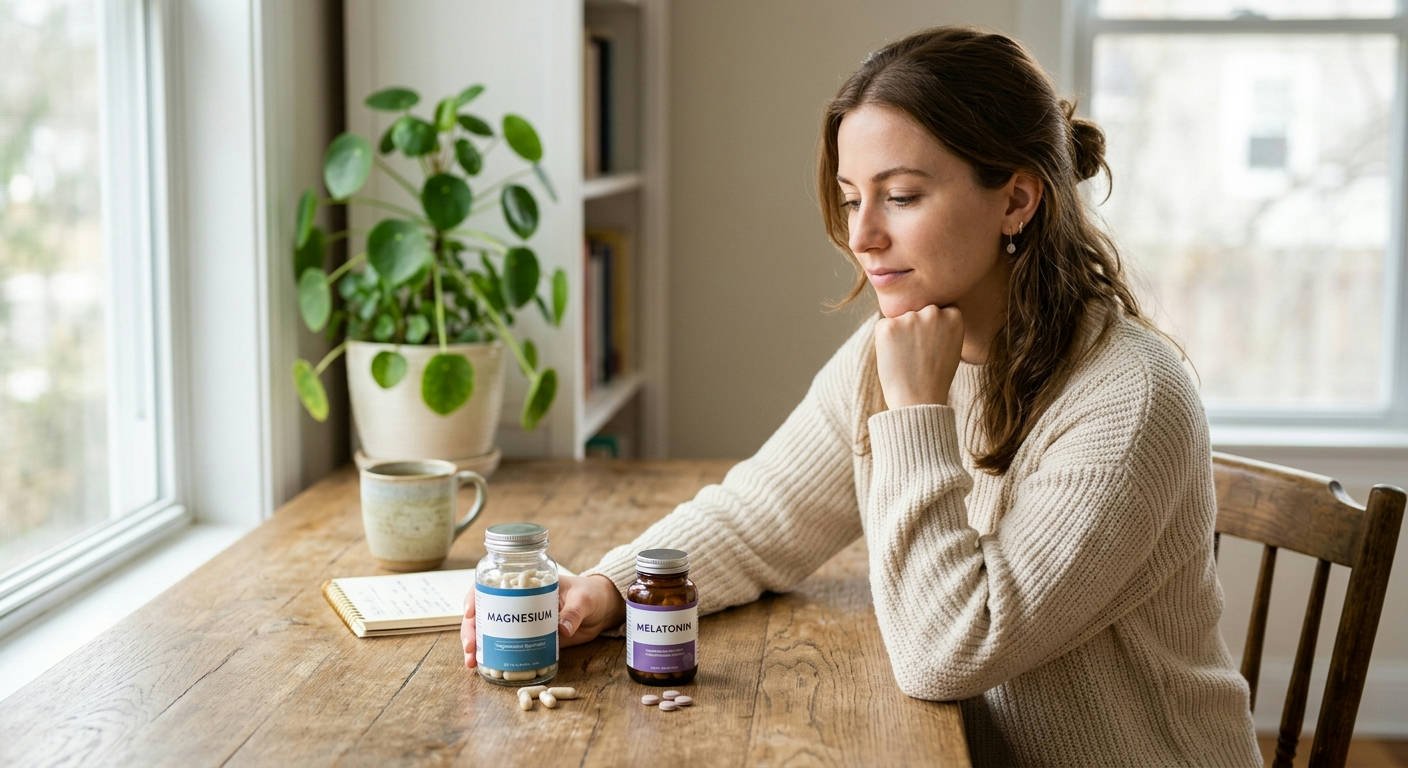

You're wound tight, the day's stress is a knot in your stomach, and a good night's sleep feels like a distant memory. The endless search for the best magnesium or melatonin for anxiety has brought you here, and we're going to cut through the noise. At Energy Supplement Reviews, we don't mess around with fluff. You need answers and a clear path to calm, not a science lecture. Let's break down which supplement actually works for taking the edge off and which one is just for hitting the hay.
Magnesium vs. Melatonin: The Real Difference for Anxiety
People often lump these two together, but they play fundamentally different roles in your body. Thinking they're interchangeable is a critical mistake that can leave you frustrated and still anxious. One is a mineral that calms your entire system; the other is a hormone that tells your brain it's nighttime.
How Magnesium Calms Your Nerves
Magnesium is a master mineral involved in over 300 biochemical reactions, many of which directly regulate your stress response. It acts like a brake on your nervous system. It helps regulate neurotransmitters, specifically by boosting GABA (gamma-aminobutyric acid), which has a calming effect.
Think of GABA as the "chill out" signal in your brain. When you're anxious, your brain is firing on all cylinders. Magnesium helps turn up the volume on GABA, telling those hyperactive neurons to take a break. It also helps regulate the stress hormone cortisol, preventing it from spiraling out of control when you're under pressure.
How Melatonin Signals "Time for Bed"
Melatonin is not a sedative in the way you might think. It doesn't knock you out. It’s the "hormone of darkness," produced by your pineal gland when the sun goes down. Its primary job is to manage your circadian rhythm—your body's internal 24-hour clock.
Taking melatonin essentially tells your body, "Okay, it's dark now, time to start winding down for sleep." It's incredibly effective for sleep timing issues like jet lag or shift work, but it doesn't directly tackle the root physiological symptoms of anxiety like a racing heart or tense muscles. Poor sleep can certainly worsen anxiety, making melatonin a useful tool, but it's not a direct anti-anxiety agent.
Decoding Magnesium: Not All Forms Are Created Equal
Walk down the supplement aisle (or scroll through Amazon) and you'll see a dozen different types of magnesium. Grabbing the cheapest one, usually Magnesium Oxide, is a rookie mistake. The form of magnesium dictates its bioavailability—how much your body can actually absorb and use.
The Best Forms for Anxiety & Absorption
For anxiety, you need a form that gets into your system effectively without causing disaster pants.
-
Magnesium Glycinate: This is the undisputed champion for anxiety and relaxation. It's chelated, meaning the magnesium is bound to the amino acid glycine. Glycine itself has calming properties, creating a powerful one-two punch for stress relief. It's also exceptionally gentle on the stomach.
-
Magnesium L-Threonate: This is the brain specialist. It's one of the only forms shown to effectively cross the blood-brain barrier, potentially enhancing cognitive function and memory while also providing calming effects. It's often more expensive but offers unique neurological benefits.
-
Magnesium Malate: Often recommended for energy and muscle soreness (it plays a role in the Krebs cycle), it can still offer calming benefits. If your anxiety is coupled with fatigue and body aches, this is a solid choice.
The Forms to Avoid for Anxiety
Don't waste your money on these if your goal is mental calm.
-
Magnesium Oxide: It has terrible bioavailability (around 4% absorption). Most of it stays in your gut, drawing in water and acting as a potent laxative. It's cheap for a reason.
-
Magnesium Sulfate: You know this as Epsom salts. Great for a bath to soothe muscles, but not meant for internal consumption for anxiety.
The Top 7: Finding the Best Magnesium or Melatonin for Anxiety on Amazon in 2026
We've done the legwork, sifted through the junk, and analyzed the top contenders on Amazon. Here are the seven products that stand out in 2026 for their quality, formulation, and effectiveness.
1. BioCalm Magnesium Glycinate 400
Summary: BioCalm is our top pick for a pure magnesium glycinate supplement. It delivers a potent, highly bioavailable dose without unnecessary fillers. It uses fully chelated TRAACS magnesium, a hallmark of quality, ensuring maximum absorption and minimal digestive upset. It's a straightforward, no-nonsense product for systemic calm.
- Pros:
- Uses premium, fully chelated Albion TRAACS magnesium.
- High potency at 200mg of elemental magnesium per capsule.
- No fillers, soy, or gluten; vegan-friendly.
- Excellent for daily stress management and muscle relaxation.
- Cons:
- Pricier than lower-quality magnesium forms.
- Capsules are on the larger side.
2. Neuro-Mag L-Threonate by BrainFlow
Summary: For those whose anxiety manifests as brain fog and racing thoughts, BrainFlow's Neuro-Mag is a game-changer. It uses the patented Magtein® form of Magnesium L-Threonate, specifically designed to penetrate the blood-brain barrier. Users report not just a sense of calm but also improved clarity and focus.
- Pros:
- Uses clinically studied, patented Magtein®.
- Directly targets brain health and cognitive function.
- Noticeable effects on mental clarity and racing thoughts.
- Cons:
- Premium price point.
- Lower elemental magnesium per serving compared to glycinate forms.
3. SleepCycle Low-Dose Melatonin (1.5mg)
Summary: Most melatonin on the market is ridiculously overdosed. SleepCycle gets it right with a 1.5mg quick-dissolve tablet. This dose is much closer to what the body naturally produces, helping to gently nudge your circadian rhythm without causing the intense grogginess or "melatonin hangover" common with 5mg or 10mg doses.
- Pros:
- Optimal low dose (1.5mg) reduces side effects.
- Fast-dissolving for quick absorption before bed.
- Great for resetting a disrupted sleep schedule.
- Very affordable.
- Cons:
- Not a direct anxiolytic; only helps anxiety related to poor sleep timing.
- Can cause vivid dreams in some users.
4. ZenPlex Nightly Formula (Magnesium + Theanine & Apigenin)

Summary: ZenPlex is an intelligent combination formula for those who need more than just magnesium. It blends Magnesium Bisglycinate with two other proven calming agents: L-Theanine (from green tea) and Apigenin (from chamomile). This synergistic stack tackles anxiety from multiple angles, promoting relaxation without sedation. It's one of the best natural energy supplements without caffeine for daytime calm, but shines at night.
- Pros:
- Synergistic formula targets multiple calming pathways.
- Includes effective doses of L-Theanine and Apigenin.
- Uses high-quality Magnesium Bisglycinate.
- Excellent for unwinding before bed without direct sleep hormones.
- Cons:
- More complex formula might not be suitable for everyone.
- Not a pure magnesium or melatonin product.
"A multi-ingredient formula like ZenPlex can be highly effective because it addresses the complex nature of anxiety. L-Theanine promotes alpha brain waves associated with a state of 'wakeful relaxation,' while magnesium works on a more physiological level."
5. PURE MAG Glycinate Powder
Summary: If you're sensitive to dosages or prefer not to swallow pills, PURE MAG's powder is the perfect solution. This unflavored Magnesium Glycinate powder allows for precise, customizable dosing. You can start with a small amount (e.g., 100mg) and titrate up to find your personal sweet spot. It mixes easily into water or a nighttime tea.
- Pros:
- Allows for fully customized dosing.
- Cost-effective, with a low price per gram.
- Highly absorbable glycinate form.
- No additives, flavors, or sweeteners.
- Cons:
- Requires measuring, which is less convenient than capsules.
- Has a slightly mineral-like taste on its own.
6. QuikSnooze Liquid Melatonin Drops
Summary: For those who need a fast-acting sleep signal, QuikSnooze liquid melatonin is superior to tablets. The sublingual (under the tongue) absorption gets the melatonin into your bloodstream faster. The dropper also allows for flexible dosing, so you can take as little as 0.5mg or up to 3mg depending on your needs for the night.
- Pros:
- Extremely fast-acting due to sublingual delivery.
- Precise, adjustable dosing with the dropper.
- Bypasses the digestive system for better absorption.
- Cons:
- Some don't like the taste of liquid supplements.
- Still carries the risk of morning grogginess if the dose is too high.
7. Triple-Calm Magnesium Complex (Glycinate, Malate, Taurate)
Summary: This product from Vitality Labs takes a blended approach to magnesium. It combines the calming force of Glycinate, the energy-supporting properties of Malate, and the cardiovascular benefits of Taurate. This makes it a fantastic all-around magnesium supplement for individuals whose anxiety is linked to physical tension, fatigue, and stress.
- Pros:
- Comprehensive formula covers multiple bodily systems.
- Combines three highly bioavailable magnesium chelates.
- Excellent for both mental and physical relaxation.
- Good value for a complex formula.
- Cons:
- The "jack of all trades" approach might be less targeted for pure anxiety than a standalone glycinate.
The Verdict: The Absolute Winner
After rigorous review, the title for the best magnesium or melatonin for anxiety doesn't go to just one product, but to a specific type of product.
For direct, daily anxiety and stress management, BioCalm Magnesium Glycinate 400 is our top pick. It's pure, potent, and uses the best form of magnesium for calming the nervous system without side effects. It addresses the physiological roots of anxiety.
For anxiety that specifically obliterates your sleep schedule, SleepCycle Low-Dose Melatonin (1.5mg) is the superior tool. It fixes the timing problem without bulldozing your system with excessive hormones.
Practical Guide: How to Use These Supplements Safely
Don't just start popping pills. A strategic approach will yield much better results.
Finding Your Optimal Magnesium Dose
Start with 200mg of elemental magnesium per day, preferably in the evening. If you tolerate it well after a week, you can increase to 400mg. The goal is to find the lowest effective dose. Too much can lead to loose stools, which is your body's clear signal to back off.
Timing is Everything for Melatonin
Take melatonin 30-60 minutes before your desired bedtime. The goal is to mimic your body's natural release. Using it as a sleep aid when you're still watching TV under bright lights is counterproductive. Create a dark, relaxing environment to help it work. This is especially crucial for anyone doing evening training who doesn't want to disrupt sleep; pairing good sleep hygiene with a proper supplement is key, as we discuss in our guide to the best evening training pre workout without sleep disruption.
A 2026 analysis published in the Journal of Clinical Sleep Medicine confirmed that melatonin doses between 0.5mg and 3mg are most effective for circadian rhythm disorders, with higher doses showing no increased benefit and more side effects.
Frequently Asked Questions (FAQs)
Can I take magnesium and melatonin together?
Yes, and it's often a very effective combination. Magnesium helps relax the body and mind, creating a calm state conducive to sleep, while melatonin signals that it's time to sleep. They work on different but complementary pathways.
How long does it take to see results for anxiety?
Melatonin's effects on sleep timing can be felt the very first night. Magnesium's benefits for anxiety are more cumulative. While you might feel calmer after the first few doses, it can take 2-4 weeks of consistent use to fully replenish your body's stores and experience a significant, stable reduction in anxiety levels.
Will melatonin make my anxiety worse?
It's unlikely to make anxiety worse directly. However, if you take too high a dose, the resulting morning grogginess and brain fog can feel unsettling and might be misinterpreted as heightened anxiety. Stick to low doses (under 3mg).
Is the "best magnesium or melatonin for anxiety" a long-term solution?
Magnesium can absolutely be a safe and effective long-term supplement for managing stress and anxiety, as it's an essential mineral. Melatonin is best used as a short-term tool to reset your sleep cycle. Long-term nightly use is debated, and it's always best to cycle off it once your sleep pattern has stabilized.
Ultimately, the choice between magnesium and melatonin depends on your primary symptom. If you feel tense, stressed, and on-edge all day, magnesium is your answer. If you feel fine during the day but simply can't fall asleep at a reasonable hour, melatonin is the tool for the job. Armed with this knowledge, you can finally make an informed decision and find the calm you're looking for.
