


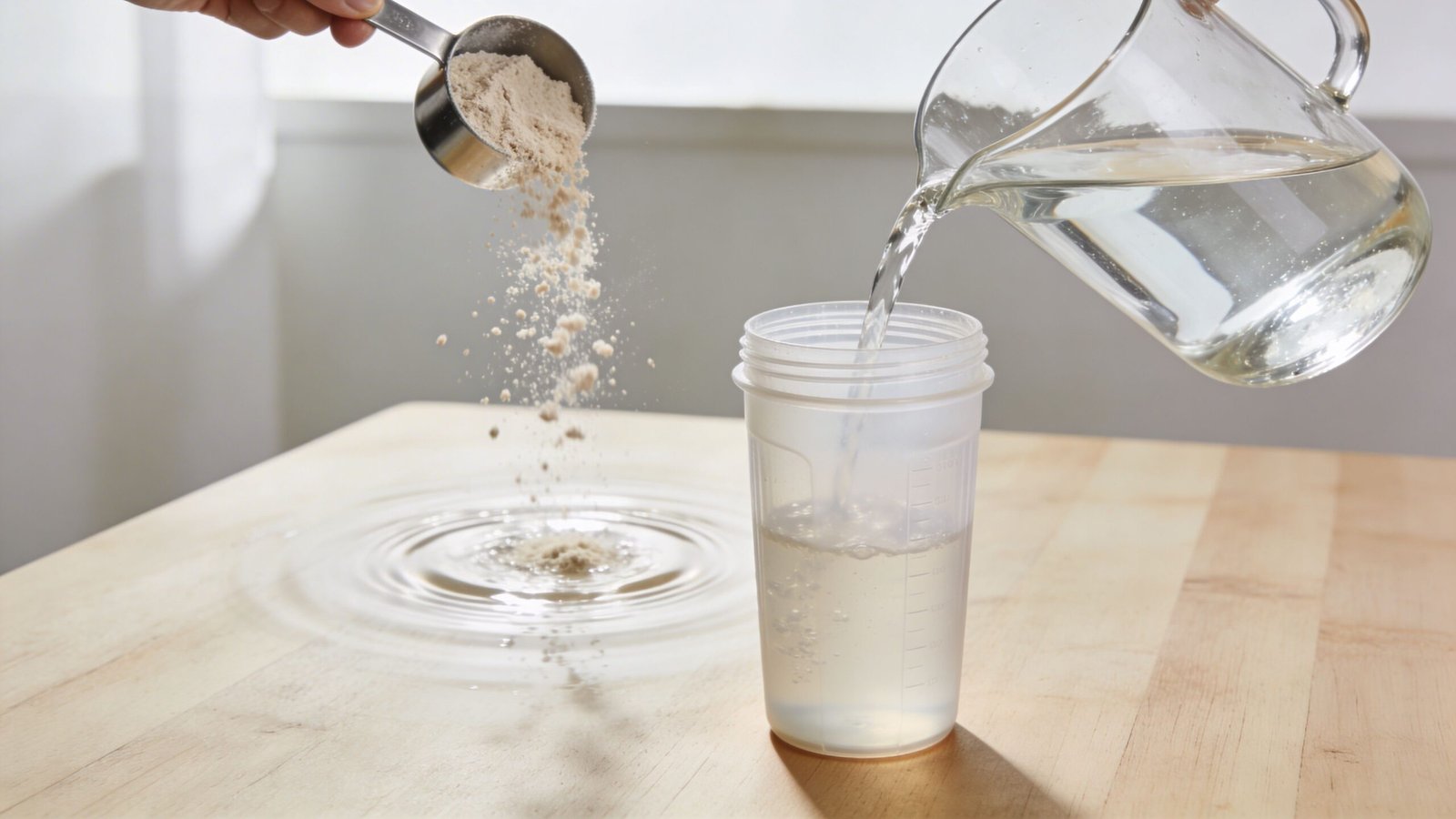
You finish a workout, reach for your shaker bottle, and pause. The tub is open. The scoop is ready. Now comes the small decision that shows up almost every day if you use supplements.
Do you mix your protein with water, or do you go for milk?
A lot of people treat that like a taste question. It's a goal question. If you’re cutting, trying to stay tight on calories, or you want a quick post-workout shake that feels light, water often makes more sense. If you want something thicker and more filling, milk may fit better.
So, can you mix protein powder with water? Yes, absolutely. For many people, it’s the smartest option.
The Post-Workout Question We All Face
You’re back from the gym, a home workout, or a quick session in the garage. You’re sweaty, hungry, and not in the mood to turn recovery into a science project. You want something fast.
That’s where the protein shake decision gets real.
Some people automatically pour milk because that’s what they started with. Others use water because it’s quick. Both work, but they don’t do the same job. The liquid you choose changes the overall shake experience, how heavy it feels, and how well it matches your current fitness goal.
Why this choice matters
If you’re in a fat-loss phase, extra calories from your mixer can work against you. If you’ve just trained hard and your stomach feels sensitive, a lighter shake may be easier to handle. If you’re rushing to work or heading out the door, convenience matters too.
That’s why this isn’t just a kitchen habit. It’s a small nutrition decision that adds up.
Here’s the simple way I explain it to clients:
- Water supports precision: You get the protein without adding much else.
- Milk adds more nutrition: That can help, or it can overshoot your plan.
- Your goal decides the best option: Cutting, lean bulking, convenience, and digestion all point in different directions.
A lot of confusion comes from one fear in particular. People worry that water makes protein somehow less effective. It doesn’t. The protein itself is still the star of the show.
The Science of Mixing Protein Powder with Water
Yes, you can mix protein powder with water, and it still works very well.

The easiest way to think about it is this. The protein powder is the package. The water is just the delivery vehicle. Your body cares most about the protein once it reaches your digestive system, not whether you sent it in with water or milk.
According to ALOHA’s explanation of mixing protein powder with water, mixing protein powder with water delivers equivalent protein absorption rates compared to mixing with milk, because your digestive system breaks down the protein independently of the liquid vehicle. The same source notes that whey can reach peak plasma amino acid concentrations within 30-60 minutes post-ingestion when mixed with water.
What your body does
When you drink a shake, your body starts breaking the protein into smaller parts called amino acids. Those amino acids move into the bloodstream and support muscle protein synthesis, often shortened to MPS.
Water doesn’t block that process. It doesn’t weaken the protein. It doesn’t “dilute away” the benefits.
What water often does is keep the shake simpler.
Why water can feel better after training
Right after a workout, many people want something that goes down easily. Water-based shakes are usually thinner, lighter, and less heavy in the stomach. That can matter if you train early in the morning, do intense sessions, or just don’t enjoy a thick shake after exercise.
Practical rule: If your stomach feels unsettled after training, start with protein and water first. You can always eat a fuller meal later.
That’s one reason water is so common around workouts. It’s not just about fewer calories. It’s about getting the protein in without adding extra digestive load.
The common misunderstanding
People often mix up absorption with fullness.
Milk may make the shake feel richer and more satisfying. That doesn’t mean the protein is suddenly better absorbed. It just means the whole drink is more substantial.
So if your main question is, “Will I still get the muscle-recovery benefit if I use water?” the answer is yes.
Water vs Milk A Detailed Nutritional Showdown
The biggest difference between water and milk isn’t whether the protein works. It’s what else comes along for the ride.

When you mix one scoop with water, you mostly get what’s on the label. When you use whole milk, you add more calories, carbs, and fat. That may be useful, or it may be unnecessary.
The side by side comparison
According to G FUEL’s comparison of protein powder with milk or water, a standard scoop of whey mixed with water delivers about 100-130 calories and 15-28 grams of protein, while mixing that same scoop with 1 cup of whole milk raises the total to about 250-270 calories, creating a 150-160 calorie surplus per shake. The same source says this matters for the 70% of gym-goers tracking macros for fat loss or lean muscle gains.
| Metric | Mixed with Water | Mixed with Whole Milk |
|---|---|---|
| Calories | 100-130 | 250-270 |
| Protein | 15-28g | Higher total shake protein |
| Carbs | Minimal additions | Higher due to milk |
| Fat | Minimal additions | Higher due to milk |
| Calorie control | Easier | Harder |
| Texture | Lighter | Creamier |
| Post-workout feel | Usually lighter | Often heavier |
What this means in real life
Let’s keep it practical.
If you drink a shake because you want just the protein, water is cleaner. It keeps the shake closer to the label. That helps if you’re trying to stay in a calorie deficit, or if you’re already getting carbs and fats elsewhere in your day.
Milk changes the job of the shake. It turns a lean supplement into something closer to a mini meal.
That’s not bad. It’s just different.
A water-based shake is usually the better tool when precision matters more than richness.
The strategic trade-off
Here’s how I’d break it down for a client:
- Choose water if you want a low-calorie shake that fits a cut, a post-workout window, or a tightly tracked meal plan.
- Choose milk if you want more creaminess and don’t mind the added calories and macros.
- Don’t assume thicker means better: A richer shake can be more enjoyable, but that doesn’t automatically make it a better fit for your goal.
A lot of people stall progress because they use “healthy” add-ons without counting them. Milk can be one of those hidden extras. If your nutrition plan is precise, your shaker liquid should be precise too.
When To Choose Water For Your Protein Shake
Water isn’t just the cheap or easy option. In several situations, it’s the best option.

If you’re wondering when mixing protein powder with water is beneficial, these are the big moments.
Right after training
After a workout, many people want something light, fast, and easy to drink. Water does that job well.
You’re not trying to create a dessert. You’re trying to get protein in without making your stomach work harder than needed. If you train before work, in a busy gym, or between errands, water keeps recovery simple.
During a cutting phase
If fat loss is the goal, water is usually the stronger move.
The reason is straightforward. You get the protein without stacking on extra calories from the mixer. That makes it easier to stay aligned with your calorie target and keep the shake focused on recovery instead of turning it into a snack by accident.
If dairy doesn’t sit well with you
This is a huge one.
According to Noom’s overview of protein water ingredients and benefits, protein water mixes often use refined isolates with less than 1 gram each of fat and lactose, which makes them useful for lactose-intolerant users, a group that affects about 65% of the global adult population. The same source says water’s lower osmolality can cut bloat risk by 30-50% during training compared with dairy mixes.
If you know milk leaves you feeling puffy, heavy, or uncomfortable, water is a very practical fix. If you want options built around that need, this guide to a lactose-free protein shake is worth a look.
When convenience matters more than kitchen perfection
Some of the best nutrition habits are the ones you’ll repeat.
Water works at the office, in the car, at the gym, or in a backpack shaker. It doesn’t need refrigeration. It doesn’t spoil as quickly. It doesn’t turn your bottle into something that smells rough if you forget to rinse it right away.
If your choice is between a quick water-based shake and skipping protein entirely, water wins every time.
How To Mix Protein Powder With Water Perfectly
Most complaints about water-based shakes come down to two things. Clumps and taste.
Both are fixable.

Start with the order
Put the water in first. Then add the powder.
This small change helps reduce the dry paste that can stick to the bottom or corners of the shaker. If you dump powder in first, it tends to cake up and create those annoying lumps.
Use the right tool
A good shaker bottle makes a real difference. A wire whisk ball or built-in mixing screen helps break up powder quickly.
If you’re using a spoon in a glass, you can still make it work. It just won’t be as smooth.
Keep the water cold
Cold water usually tastes better with protein powder. It also tends to improve texture.
Room-temperature water can work, but many powders taste flatter that way. Hot water can make mixing rougher and create lumps.
Simple fix: If your shake tastes thin with water, use colder water before changing powders.
Shake it hard, not forever
Most shakes come together well with a solid shake. If clumps remain, let the bottle sit briefly, then shake again.
You don’t need a blender for a basic protein-and-water shake unless you’re adding extra ingredients.
Make it taste better without making it heavy
If you don’t love the taste of protein with plain water, try one of these low-fuss upgrades:
- Cinnamon: Helps warm up vanilla or chocolate flavors.
- Vanilla extract: A few drops can round out a harsh aftertaste.
- Ice: Makes the shake feel cleaner and more refreshing.
- Better powder flavor: Some products are made to work better with water.
A quick mixing routine
- Add cold water to your shaker.
- Add one scoop of protein powder.
- Seal tightly.
- Shake until smooth.
- Taste, then adjust next time with more or less water depending on how thick you want it.
If your shake is gritty every single time, it may not be your technique. It may be the powder itself.
Top Protein Powders for Mixing with Water Review 2026
If your goal is to mix with water, the type of protein matters a lot. Some powders were practically made for it. Others are much better with milk or in a blender.
To keep this useful, I’m reviewing protein categories commonly sold on Amazon rather than inventing a brand ranking. That gives you a better buying framework.
Whey protein isolate
This is usually the first type I’d suggest for water mixing.
It tends to be lighter, cleaner, and easier to drink when you don’t have milk covering up texture or flavor. It’s also often the better pick if you want a shake that feels crisp instead of creamy.
Pros
- Usually mixes smoothly in water
- Often tastes cleaner than heavier formulas
- Commonly lower in lactose
- Works well for post-workout use
Cons
- Often costs more
- Some isolates taste thin if the flavoring is weak
Whey protein concentrate
Concentrate can still work with water, but it’s more hit or miss.
Some concentrates taste great and mix fine. Others feel a little thicker or chalkier when water is the only liquid.
Pros
- Often more budget-friendly on Amazon
- Can have a richer flavor profile
- Widely available
Cons
- May feel heavier in water
- Mixability can be less consistent
- Not always ideal for sensitive stomachs
Plant-based blends
Plant proteins have improved a lot. Some now mix surprisingly well with water, especially if the formula was built for shake-bottle use.
Still, this category varies more than whey. One product can be smooth and pleasant. Another can feel grainy.
Pros
- Good option if you avoid dairy
- Many flavored versions work well in water
- Useful for people with different dietary preferences
Cons
- Texture varies a lot
- Some blends taste earthier
- Can require more water for a better mouthfeel
My buying summary
If you want the easiest path, start with whey isolate. If budget matters most, test a concentrate with strong reviews for mixability. If you avoid dairy, look for a plant blend marketed as smooth in water.
For a broader buying checklist, this guide on how to choose protein powder can help narrow things down.
Conclusion Your Shake Your Rules
So, can you mix protein powder with water?
Yes, and for many people it’s the most practical and goal-friendly choice. Water keeps the shake lighter, simpler, and easier to fit into a cutting phase or a quick post-workout routine. It also makes life easier if dairy doesn’t agree with you or you just want something fast.
Milk still has a place. It can make a shake thicker, richer, and more filling. But that doesn’t make it automatically better. It just makes it different.
The smart move is to match the liquid to the job.
If you want a lean, efficient shake that does one thing well, which is deliver protein without much extra, water is hard to beat. If you want a more substantial drink and the added macros fit your plan, milk may work better.
That's the main takeaway. Don’t choose based on habit. Choose based on your current goal, your digestion, and what you’ll use consistently.
Frequently Asked Questions About Protein and Water
Can you mix protein powder with water instead of milk
Yes. That’s completely fine, and for many people it’s the better option. Water gives you a lighter shake and keeps the drink focused on the protein itself.
Does water make protein powder less effective
No. As covered earlier, the protein is still absorbed effectively when mixed with water. The liquid changes the shake experience more than the core protein function.
How much water should you use for one scoop
Use the serving suggestion on your tub as your starting point. If the shake tastes too strong or thick, add more water next time. If it feels too watery, use a little less.
A simple rule is to adjust for preference, not to chase a perfect universal ratio.
Can you mix protein powder with hot water
You can, but it usually isn’t the best option for texture. Hot liquid can make some powders clump more easily, and the final drink often tastes worse than a cold shake.
If you want to use warmth, start by mixing the powder with a small amount of cooler liquid first.
Is it okay to premix a protein shake with water
Yes. If you mix it ahead of time, give it another shake before drinking because the texture can settle.
This is useful if you pack your shake for work, commuting, or training later in the day.
Can you drink a water-based protein shake before bed
Yes, if you want something light. Some people prefer a lighter option at night because it doesn’t feel as heavy as a thicker shake.
What if protein powder tastes bad with water
Try colder water, a better shaker bottle, or a different powder type. Flavor quality matters a lot more when water is the only mixer.
You can also improve the experience with cinnamon, ice, or a few drops of vanilla extract.
Are water-based shakes good if you’re using multiple shakes per day
They can be, especially if you’re trying to keep calories under control. If you’re using shakes often, it’s smart to think about your total intake across the day. This article on how many protein shakes a day can help you think that through.
If you want more no-nonsense supplement guides, practical workout nutrition advice, and product breakdowns for everyday training, visit Energy Supplement Reviews.
