


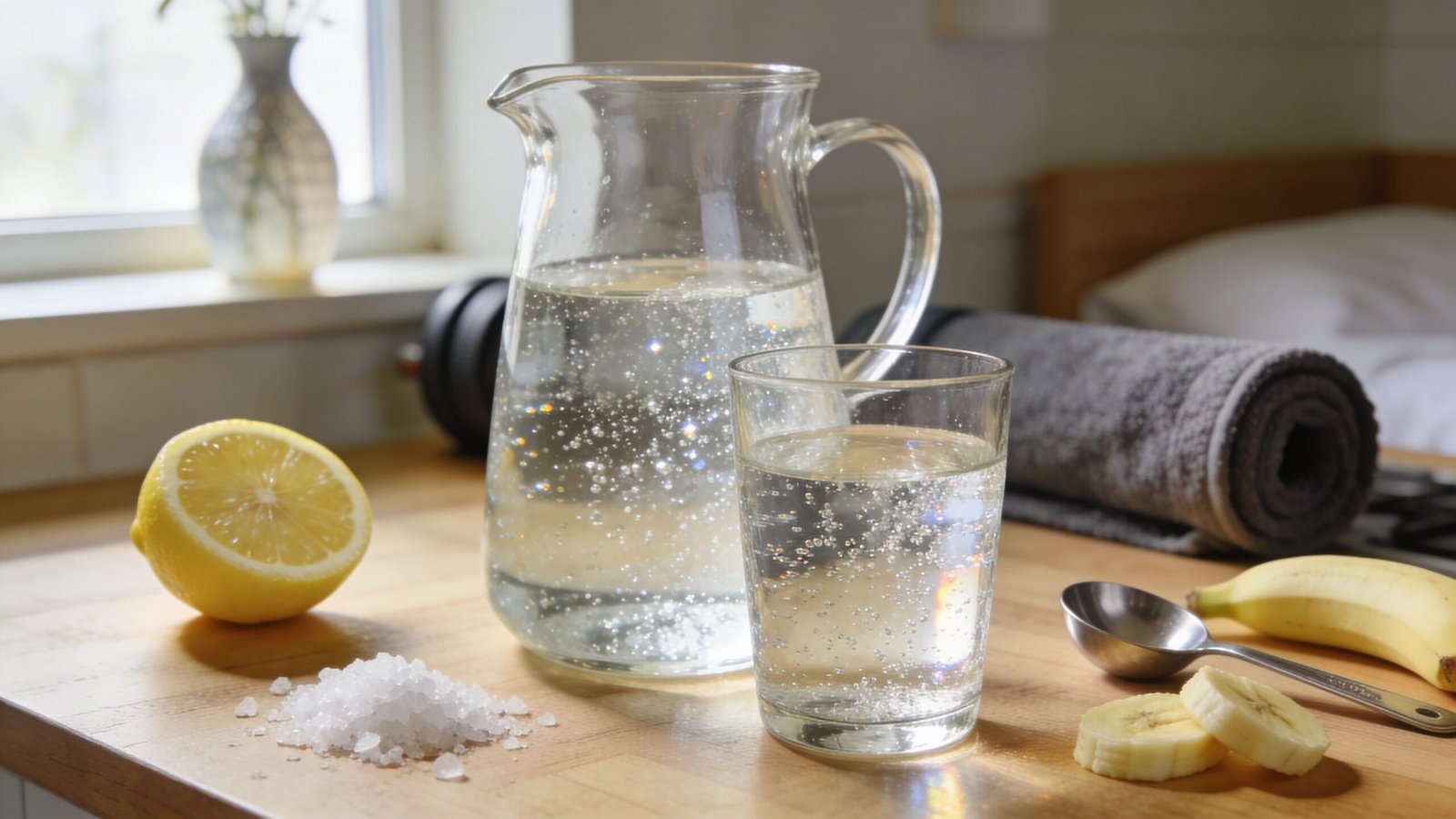
You finish a workout, drain half a bottle of water, and still feel flat. Your legs feel heavy, your head feels foggy, and plain water doesn’t seem to fix it. That’s usually the point where people either buy an expensive sports drink or throw a random pinch of salt into a shaker bottle and hope for the best.
A better approach is to match the drink to the job.
If you want to know how to make electrolyte water that works, the details matter. A light daily hydration mix shouldn’t look the same as a post-HIIT drink, and neither of those should be confused with a serious rehydration formula for illness. Below is a practical review of 3 homemade electrolyte water recipes for three different situations: everyday wellness, hard training, and recovery during illness.
Why Your Body Needs More Than Just Water
A hard sweat session can leave you under-recovered even if you drank plenty of water. The reason is simple. Sweat carries out fluid and sodium together, and that changes how well your body can hold onto the water you drink afterward.
For at-home trainees, that matters most in three situations: long sessions, hot conditions, and any stretch of illness that includes vomiting or diarrhea. In those cases, replacing water alone often falls short because the body also needs enough sodium, and sometimes a small amount of carbohydrate, to improve fluid absorption.
What actually causes that drained feeling
Sodium is the main electrolyte lost in sweat, with smaller losses of potassium, calcium, and magnesium. If you replace only fluid after a high-sweat workout, blood sodium can get diluted and recovery can feel incomplete. The result is familiar. Heavy legs, low energy, headache, and that odd feeling that your water is not really “sticking.”
That does not mean everyone needs a sports drink after every workout. A 30-minute strength session in a cool room is different from an hour of intervals in a hot garage gym. The job of an electrolyte drink is to match the situation, not to turn every bottle of water into a performance product.
Why random DIY recipes miss the mark
The weak point in many homemade mixes is dosing. “A pinch of salt” might be fine for flavor, but it is not precise enough if you want a repeatable hydration formula. That matters even more when you are trying to build three different drinks for three different jobs: a light daily mix, a stronger training formula, and a true rehydration option for illness.
Utah State University Extension notes that homemade electrolyte drinks can be useful, but the ingredients and amounts need to be chosen with purpose, especially if you want a drink that does more than flavor water (Utah State Extension electrolyte drink guidance).
Commercial products have their own trade-offs. Some are convenient and well-formulated for endurance work. Some are sweeter than necessary for light use at home. That is why a review of separate formulas works better than one generic recipe. Daily wellness hydration should stay lighter. Intense exercise usually needs more sodium and often some carbohydrate. Illness rehydration calls for a more exact balance because absorption becomes the priority.
Hydration is one piece of the recovery picture. If low energy keeps showing up even when fluids are dialed in, it can help to review other natural supplements for reducing fatigue.
The Core Ingredients Your Homemade Electrolyte Drink Needs
The best homemade electrolyte drinks use a small set of ingredients, each with a job. Once you understand those jobs, you can spot weak formulas fast.
Sodium does the heavy lifting
Sodium helps your body retain fluid and supports nerve and muscle function. In practical terms, it’s what turns flavored water into a drink that helps after sweating. Without enough sodium, you can drink a lot and still not feel recovered.
Salt is the most direct way to add it. Table salt works. Himalayan salt works. The main point is measurement, not trendiness.
Potassium balances the formula
Potassium supports muscle contraction and fluid balance inside cells. This is the mineral many loose DIY recipes miss. Citrus juice and coconut water can help, and cream of tartar is another common DIY option when you want a stronger potassium contribution.
If you cramp easily or train in the heat, potassium becomes more important. That’s one reason random “salt water” mixes often disappoint.
Magnesium helps when training volume climbs
Magnesium belongs more in performance-oriented formulas than in a basic daily drink. It supports muscle relaxation and energy production. You don’t always need to add it, but it becomes useful when you sweat heavily or want a more complete powder mix.
A little carbohydrate can improve uptake
A small amount of glucose or sugar isn’t just there for taste. In rehydration formulas, it helps the body absorb sodium and water more effectively. That’s why the best illness rehydration recipes include sugar on purpose instead of treating it like a mistake.
The strongest DIY drinks aren’t the ones with the longest ingredient list. They’re the ones with the right ingredients in the right ratio.
What each ingredient contributes
| Ingredient | Main job | Best use case |
|---|---|---|
| Salt | Supports fluid balance and hydration | Daily use, workouts, illness |
| Citrus juice | Adds flavor and some potassium | Daily use, light exercise |
| Coconut water | Adds potassium and some sodium | Daily use, moderate training |
| Magnesium powder | Supports muscle and nerve function | Intense training |
| Sugar or dextrose | Helps absorption, adds energy | Long sessions, illness rehydration |
| Baking soda | Adds bicarbonate in some formulas | Performance and ORS-style recipes |
If your training schedule is aggressive, the bigger recovery picture matters too. This guide on a recovery power formula for two-a-day training athletes fits well alongside smarter hydration.
Recipe Review 1 The Everyday Wellness Elixir
You get home from a walk, a light lift, or a warm afternoon of errands and plain water still does not sound good. That is the sweet spot for this formula. It gives home trainees a lighter electrolyte option that is easier to drink than a sports beverage and less aggressive than a workout-specific mix.

The recipe
Use this for daily hydration, light activity, warm-weather errands, or desk days when plain water feels unsatisfying.
Ingredients
- 1/4 tsp salt
- 1/4 cup lemon juice
- 1/4 cup lime juice
- 1 1/2 cups unsweetened coconut water
- 2 cups cold water
Mix everything in a large bottle or pitcher. Chill if you want a cleaner, less salty taste.
As noted earlier, this classic DIY combination gives you a moderate dose of sodium plus potassium from coconut water and citrus. That makes it a strong first recipe for everyday use, especially if you want something more purposeful than flavored water without jumping straight to a heavy training formula.
Why I rate it well for daily use
This is the most practical recipe of the three. You can make it from grocery-store ingredients, the flavor is familiar, and the electrolyte level fits normal hydration better than sugary sports drinks built for harder sessions.
The trade-off is precision. Coconut water varies by brand, bottled citrus can taste sharper than fresh juice, and your final sodium intake depends on how accurately you measure the salt. For daily wellness, that is usually fine. For exact replacement after a long, sweaty session, I would switch to the stronger formulas later in this guide.
It also works well for people who struggle to drink enough water at home. A small amount of salt plus tart citrus often makes the bottle easier to finish.
Best ingredient choices to look for
You do not need specialty powders here. A few smart choices make the recipe better:
- Fine salt: Easier to dissolve and measure consistently.
- Unsweetened coconut water: Avoid added sugar unless you want a sweeter drink.
- Fresh lemon and lime or plain bottled juice: Both work. Fresh tastes better, bottled is faster.
- A shaker bottle or pitcher: Helpful if you want to prep enough for the day.
Here’s a quick demo if you like seeing the mixing process in real time.
Pros and cons
Pros
- Easy to make: No supplement tub or specialty ingredients required.
- Good fit for normal hydration: Better for daily use than workout drinks designed for long endurance efforts.
- Better taste than salt water: Citrus and coconut water make it more drinkable.
- Flexible: Easy to adjust with more water if the flavor feels too intense.
Cons
- Too light for heavy sweat losses: Fine for baseline hydration, weaker for long or very hot workouts.
- Flavor can be divisive: Coconut water is not universally liked.
- Less exact: Ingredient variation makes it harder to control electrolyte intake closely.
If you want one homemade formula for regular life, this is the bottle I would keep in weekly rotation.
Recipe Review 2 The Performance Fuel for Intense Exercise
When training gets hard, the everyday mix starts to show its limits. A long run, a sweaty garage workout, or a demanding leg day usually calls for a stronger formula with more deliberate electrolyte replacement.

The recipe
This version is better for HIIT, long cardio, heavy lifting in the heat, or any session where you finish drenched.
Ingredients
- 1 liter water
- 1/4 tsp Himalayan sea salt
- 1/4 tsp baking soda
- 1/2 tsp magnesium citrate powder
- 2 tbsp cream of tartar
Mix until fully dissolved. If you want a lighter taste, chill it hard or add a squeeze of lemon for flavor.
According to Drink Flow Water, athletes can lose 300 to 600 mg of sodium per liter of sweat, and a DIY powder mix built around 1/4 tsp Himalayan sea salt, 1/2 tsp magnesium powder, and cream of tartar for potassium can better match those losses. The same source also notes that electrolyte drinks can boost performance by up to 20% in endurance studies when losses are replaced more precisely (Drink Flow Water on DIY electrolyte powder).
Why this one performs better
This formula is stronger and more functional than the wellness recipe. Salt handles sodium. Cream of tartar contributes potassium. Magnesium rounds it out. Baking soda adds bicarbonate, which some people find useful in harder efforts.
The trade-off is taste. This is more “performance drink” than “refreshing citrus water.” That’s normal. Drinks designed for results don’t always taste like something you’d order with lunch.
Who should use it
This recipe makes the most sense if your sessions include:
- High sweat output: You finish soaked, not just warm.
- Long duration work: Runs, rides, circuits, or sports sessions.
- Two-a-day training: Especially when your second session suffers if you under-recover.
- Hot environment training: Garage gyms, summer runs, poor ventilation.
Amazon product ideas worth considering
For this kind of mix, I’d look for:
- Magnesium citrate powder: Easier to blend than capsules opened by hand.
- Cream of tartar: Common baking aisle item, easy to find on Amazon.
- Himalayan sea salt: Fine grind mixes better.
- Large shaker bottle: Powder-based recipes need more aggressive mixing.
Pros and cons
Pros
- Better matched to sweat loss: Stronger option for demanding training.
- More complete mineral profile: Covers more than sodium alone.
- Useful for serious home trainees: Especially if you train in heat.
Cons
- Taste is more medicinal: Less pleasant than the citrus-coconut formula.
- Requires specialty ingredients: Magnesium powder isn’t in every pantry.
- Overkill for casual use: Too much formula for a light walk or office day.
Recipe Review 3 The WHO-Inspired Rehydration Solution
A hard workout can leave you drained. A stomach bug is different. When vomiting or diarrhea enters the picture, the goal shifts from general hydration to restoring fluid and electrolytes with a measured oral rehydration formula.

This is the most precise recipe in this guide. I would not use it as an everyday bottle for home training, and I would not swap in random ingredients because they seem close enough.
The recipe
Use this formula for illness-related dehydration, especially short-term fluid loss from vomiting, diarrhea, or poor intake during a stomach bug.
Ingredients for 1 liter
- 3/8 teaspoon table salt
- 1/4 teaspoon sodium-free salt substitute
- 1/2 teaspoon baking soda
- 2 1/2 tablespoons table sugar
- 1 liter boiled and cooled water
Stir until everything fully dissolves. Small errors matter here, so use proper measuring spoons and a full liter of water, not an estimated bottle size.
Why this formula works
Each ingredient has a job.
Table salt supplies sodium, which helps replace what illness can strip out quickly. Sodium-free salt substitute adds potassium, another electrolyte commonly lost with diarrhea and vomiting. Baking soda contributes bicarbonate, which can help support acid-base balance during GI fluid loss. Sugar improves sodium and water absorption through the sodium-glucose transport system in the intestine.
That sugar is not there for flavor. It is there because plain water alone is often a poor tool when the gut is irritated and electrolytes are being lost.
Who should use it
This is the right fit for situations like:
- Vomiting or diarrhea: Especially when plain water is not sitting well
- Short-term illness dehydration: Fever, stomach bugs, or low appetite with fluid loss
- At-home recovery: When someone needs a simple, measured rehydration option before they can return to normal eating and drinking
For athletes, this formula has a narrower role. It makes sense if illness is the reason you are dehydrated. It does not make sense as your default training drink.
Pros and cons
Pros
- Purpose-built for rehydration: Better matched to illness-related fluid loss than plain water
- Low cost: Uses common pantry items
- Clear dosing: Easier to repeat consistently if a household member gets sick
Cons
- Taste is functional: Mildly salty and not very pleasant
- Precision matters: Eyeballing the recipe can throw off the balance
- Too specific for casual use: Daily wellness and training sessions call for different formulas
Practical notes that matter
Sip it slowly if nausea is present. Large gulps often come back up. In practice, small frequent sips work better than trying to finish a big glass quickly.
Use table salt, not coarse kosher salt, unless you are measuring by weight. Crystal size changes volume, and that can push sodium higher or lower than intended. If you keep this recipe in your household toolkit, store the ingredients together so nobody has to hunt for the salt substitute when they are already sick.
When home rehydration is not enough
Get medical help if someone cannot keep fluids down, becomes unusually sleepy or confused, urinates very little, or shows signs of severe dehydration. Homemade oral rehydration can help in mild to moderate cases, but it is not a substitute for medical care when symptoms are escalating.
Storage Safety and Flavor Customization
A good homemade electrolyte drink should still taste decent and stay safe by the time you drink it. That matters even more at home, where people often mix a full bottle in the morning and finish it hours later.
Storage depends on which of the three formulas you made. The everyday wellness mix and the performance formula are usually more forgiving, but once you add citrus, coconut water, or any fresh ingredient, shelf life drops. The WHO-style rehydration drink calls for the most caution because accuracy and cleanliness matter more when someone is already dealing with vomiting or diarrhea.
How to store each formula without guessing
Use the illness rehydration formula within 24 hours and keep it refrigerated. If it looks cloudy, smells odd, or has been sitting out for long stretches, make a fresh batch. For a sick household member, I would rather mix a new bottle than gamble on one that has been handled all day.
For the other two recipes, these rules work well:
- Refrigerate soon after mixing: This is the safest move if the recipe includes lemon, lime, orange, or coconut water.
- Use a sealed bottle or jar: Less air exposure helps preserve flavor and reduces the chance of contamination.
- Shake before drinking: Sodium and other minerals can settle at the bottom.
- Toss it if the taste changes noticeably: Homemade drinks do not contain the stabilizers used in commercial products.
If you train in the garage, basement, or backyard, pre-mix only what you will likely finish that day. A large batch sounds efficient, but smaller batches usually taste better and keep the formula more consistent.
Flavor changes that keep the formula useful
Taste matters because a drink only helps if you want to sip it. The mistake I see is turning electrolyte water into flavored juice. That works against the whole point, especially with the exercise and illness formulas where the sodium-to-fluid balance matters.
Use small additions that improve drinkability without changing the recipe too much:
- Lemon or lime slices: Best for the wellness formula and light training sessions
- Fresh mint: Works well when you want a cleaner taste without adding sugar
- A few crushed berries: Fine in the wellness version, less useful in the performance or illness formulas
- Extra ice or very cold water: One of the easiest ways to soften a salty taste
Keep the performance drink simpler than the wellness one. During hard training, heavy fruit pulp or too much acidity can make a bottle less appealing once it gets warm. For illness rehydration, skip custom flavoring unless you are making very small changes. The goal is steady intake, not creativity.
Cold temperature improves palatability fast.
If you already prep shakes around your workouts, this guide on mixing protein powder with water can help you keep bottles, timing, and cleanup simple.
Summary and Frequently Asked Questions
The best answer to how to make electrolyte water is to stop looking for one perfect recipe. Use the everyday wellness elixir for light hydration and normal recovery. Use the performance formula when sweat loss is high and training is demanding. Use the WHO-inspired rehydration solution when illness is the issue and accuracy matters most.
The pattern is simple:
- Match the drink to the situation
- Measure ingredients carefully
- Don’t assume more salt automatically means better hydration
- Use flavor additions sparingly
- Treat illness rehydration differently from sports hydration
Frequently asked questions
Can I use table salt instead of Himalayan salt
Yes. Table salt works well, especially when precision matters. Himalayan salt is fine for general use, but the key factor is accurate measuring.
Do I need coconut water in homemade electrolyte water
No. It’s useful in the daily wellness recipe because it adds potassium and improves taste. It isn’t required in every formula.
Is sugar necessary
Sometimes. In the illness rehydration formula, sugar has a functional role in absorption. In a casual daily drink, it’s optional and often unnecessary.
Which recipe is best after a hard home workout
Use the performance-focused formula if the session was long, hot, or very sweaty. If it was moderate, the everyday wellness recipe is usually enough.
Can kids drink homemade electrolyte water
It depends on the situation and the recipe. The wellness mix is different from a WHO-style rehydration solution. For children who are sick, it’s smart to be careful and get medical guidance if symptoms are significant.
How do I know if I need electrolytes or just water
Look at the context. Heavy sweating, heat, long sessions, or illness point more toward electrolyte replacement. Light daily hydration usually needs less.
If you want more practical fitness nutrition breakdowns, recovery advice, and supplement-focused reviews built for busy home trainees, visit Energy Supplement Reviews.
